
You probably have a mental image of Tanzania already: endless golden plains, silhouetted acacia trees, maybe a herd of wildebeest kicking up dust at sunset.
That picture is real, but it’s only a slice of what waits for you here.
Tanzania travel is about contrasts: one day you’re bumping along a red-dirt track, scanning for lions, the next you’re barefoot on powdery white sand with the call to prayer drifting over a Swahili old town.
It’s a place where you can feel very small under a sky full of stars and very connected sharing chai with a market vendor who insists you try just one more mandazi.
This guide is built for you if you care about more than just ticking off the “Big Five.“ You’ll get concrete tips on when to go, how to budget, where to find Wi‑Fi between game drives, and how to engage respectfully with local culture, without losing that sense of awe you’re craving.
Why Tanzania Belongs On Your Travel Radar
If you’re going to cross an ocean, you want a trip that feels big, not just in miles, but in memories. Tanzania quietly delivers on that in a way few places can.
You get:
- Some of the richest wildlife diversity on the planet. Lions, leopards, elephants, rhinos, buffalo, yes, the full Big Five, plus cheetahs, giraffes, hippos, and more birdlife than you can reasonably identify. The ecosystems here (Serengeti, Ngorongoro, Ruaha, and beyond) are wild yet surprisingly well-managed.
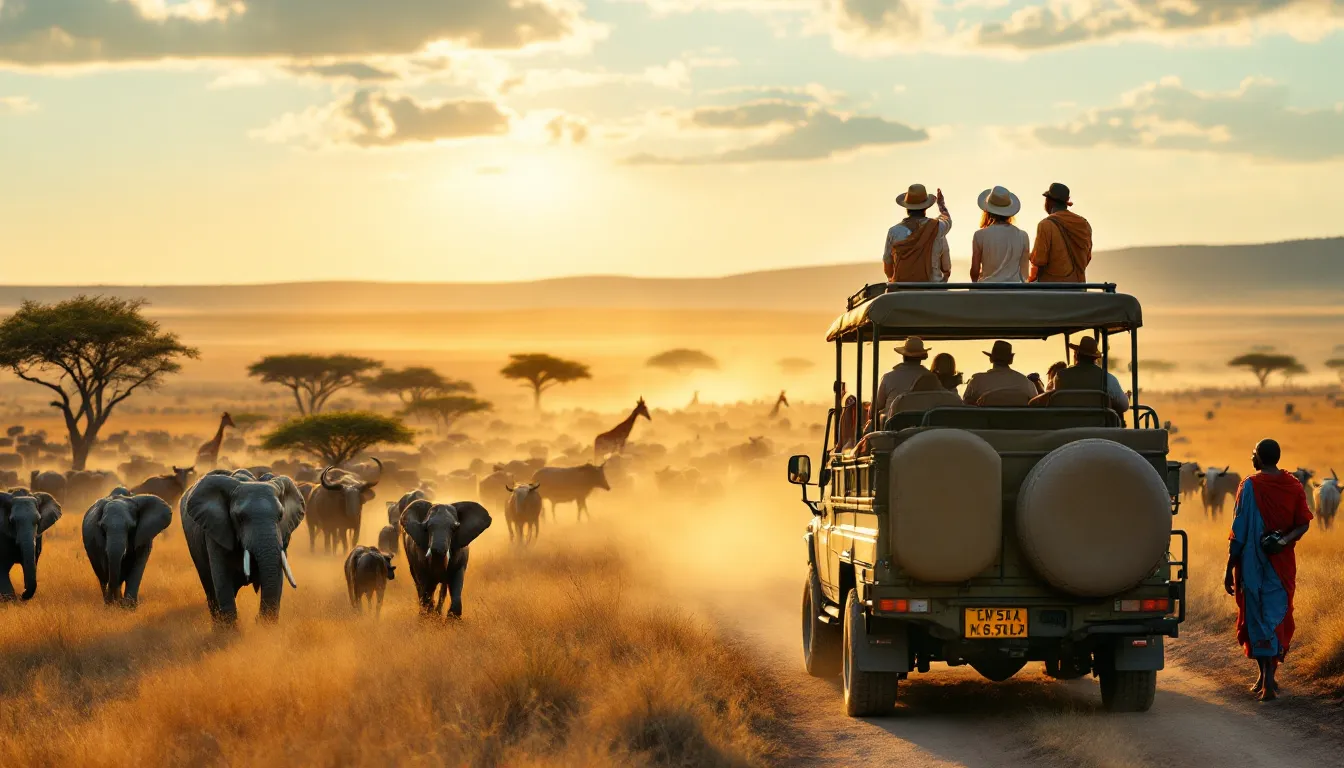
- The drama of the Great Migration. Over a million wildebeest and hundreds of thousands of zebra keep moving across the Serengeti–Mara ecosystem. Depending on when you come, you might see calves being born, river crossings, or vast herds rolling over the horizon like a living storm.
- Epic, cinematic landscapes. The bowl of Ngorongoro Crater at sunrise, baobab forests in Tarangire, the glassy surface of Lake Manyara, the hazy mountains around Ruaha, you’re essentially wandering through a nature documentary set.
- Deep cultural layers. Maasai warriors herding cattle at dawn, Swahili sailors navigating dhows by the wind, Hadzabe hunter-gatherers keeping traditions alive, and bustling modern Tanzanian cities like Arusha and Dar es Salaam, all part of the same story.
For a curious traveler, Tanzania is a sweet spot: wild but accessible, intense but grounding, with enough infrastructure that you can travel safely and comfortably while still feeling far from your daily life.
Best Time To Visit Tanzania (By Season And Experience)
You can visit Tanzania year-round, but what you experience changes with the seasons, especially if you’re aiming for the Great Migration.
January–March: Calving season (Southern Serengeti & Ndutu)
- Best for: vast herds, baby wildebeest, intense predator action.
- What it feels like: Green, lush plains, dramatic skies, frequent sightings of lions and cheetahs.
- Downsides: Occasional rain and some muddy tracks, but it’s all part of the adventure.
June–July: Grumeti crossings (Western Serengeti)
- Best for: cooler weather, river scenes, walking safaris in some areas.
- What it feels like: Crisp mornings, golden grass, fewer bugs, great general wildlife viewing.
August–October: Mara River crossings (Northern Serengeti)
- Best for: classic “BBC documentary” moments, wildebeest braving crocodile-filled rivers.
- What it feels like: Peak drama, peak prices, and limited lodge space. If you want this, book 12–18 months ahead.
November–December: Short rains and transitions (Central Serengeti & Ndutu)
- Best for: fewer crowds, lower prices, beautiful stormy light over the plains.
- What it feels like: Afternoon showers, green landscapes returning, wildlife still abundant.
Outside of safari, Zanzibar and the Swahili Coast are best from June to October and December to early March, when it’s dry and sunny. Avoid the long rains in April and May if your heart is set on long beach days and clear waters.
If this is your once-in-a-decade Africa trip, align your dates with the experience you want most, calving, river crossings, or simply fewer people and a slower vibe.
Where To Go: Classic Routes And Offbeat Regions
Think of Tanzania as several trips wrapped into one big map. The classic route is the Northern Safari Circuit + Zanzibar, but if you’ve got extra time (or a higher tolerance for rough roads), the south and west feel like the Africa most travelers never see.
Northern Safari Circuit: Serengeti, Ngorongoro, And Beyond
If it’s your first Tanzania travel adventure, this is where you’ll probably start.
- Serengeti National Park – The star of the show. Days begin with coffee in the cool blue light, then game drives across endless plains. Here you chase the Great Migration, but even without it, the predator action is some of the best in Africa.
- Ngorongoro Crater – Picture a huge volcanic bowl, mist spilling over the rim at sunrise. Inside: dense populations of lions, hyenas, elephants, and (if you’re lucky) black rhino. It’s busy, but it’s also one of those places that really is as good as they say.
- Tarangire National Park – Underrated and quieter. Famous for elephants and monumental baobab trees. In the dry season, wildlife crowds around the river, making for easy, satisfying sightings.
- Lake Manyara – Compact and lush. Known for tree-climbing lions and flocks of flamingos when the water levels are right.
Most travelers do a 5–8 day loop starting and ending in Arusha, combining 2–4 parks. It’s a great balance of variety and not feeling rushed.
Zanzibar And The Swahili Coast: Beach Time After Safari
After days of early wake-up calls and dusty roads, the first time you step onto Zanzibar’s soft sand is a small shock to the system.
- Stone Town – A maze of alleys, elaborately carved doors, and rooftop cafes. You smell cloves and grilled seafood, hear kids playing soccer by the waterfront, and the call to prayer echoes off old coral-stone buildings. Allow at least a full day to wander.
- Northern beaches (Nungwi, Kendwa) – Classic turquoise water and wide beaches, with more nightlife and a social vibe.
- Eastern coast (Paje, Jambiani) – Windier, with kitesurfers skimming over the lagoon, tide pools, and a more laid-back feel. Great for barefoot work sessions from beach cafes if you’re on your laptop.
Beyond Zanzibar, there’s Pangani, Bagamoyo, and smaller islands where Swahili history runs deep and tourism is lower-key.
Southern And Western Parks: Wild, Remote, And Crowd-Free
If your ideal safari is fewer vehicles and more raw wilderness, aim south or west.
- Ruaha National Park – Huge, wild, and beautifully rugged. Lion and elephant stronghold, with rocky kopjes and broad riverbeds. Lodges are more spread out, and you can go hours without seeing another vehicle.
- Nyerere National Park (formerly Selous) – A massive reserve of rivers, lakes, and woodlands. Boat safaris along the Rufiji River are a highlight.
- Katavi – Way out west and rarely visited. Think dense hippo pods, big crocs, and a sense that you’re at the end of the road.
- Mahale Mountains / Gombe – On the shores of Lake Tanganyika, these parks are among the best places in the world to track chimpanzees in the wild.
These regions are usually pricier and logistically more complex (often requiring internal flights), but in terms of solitude, they’re hard to beat.
Culture, Food, And Everyday Life In Tanzania
Your trip won’t be defined only by the wildlife. A lot of the magic happens in the in-between moments, at market stalls, in dusty bus stations, at beach bonfires.
Local Etiquette And Cultural Norms
Tanzanians are generally warm, welcoming, and fairly conservative.
- Greetings matter. A simple “Mambo?“ or “Habari?“ followed by “Poa“ (cool) goes a long way. Shake hands: with older people, a slight bow or two-handed handshake shows respect.
- Dress modestly in towns and villages. On beaches and in lodges you can relax, but in Stone Town, markets, and rural areas, cover shoulders and knees.
- Ask before photos. Especially with Maasai, Hadzabe, or in local markets. Some communities earn income from cultural tourism: others simply prefer privacy.
- On safari, respect the rules. Keep a safe distance from animals, stay in the vehicle unless your guide says otherwise, and keep noise low around wildlife.
A little Swahili goes a long way: asante (thank you), tafadhali (please), samahani (sorry/excuse me).
What To Eat And Drink: From Street Snacks To Swahili Flavors
If you love food, Tanzania will quietly spoil you.
- Street snacks – Try chipsi mayai (French fries cooked into an omelet), samosa, and mandazi (slightly sweet fried dough) with chai. Cheap, filling, and everywhere.
- Swahili coast cuisine – On Zanzibar and the mainland coast, dishes lean into spices and coconut milk: prawn curries, grilled fish, octopus stew, pilau rice, and fresh juices. Seafood lovers, this is your zone.
- Everyday staples – Ugali (a thick maize porridge) served with greens and meat, grilled meats, and bean stews.
For drinks, you’ve got local beers like Kilimanjaro and Serengeti, strong black coffee, and fresh sugarcane or tamarind juice at markets. Tap water isn’t safe to drink: stick to treated or bottled water.
Markets, Music, And Moments Of Connection
If you want to feel the daily rhythm of the country:
- Arusha’s markets are a full sensory overload, piles of avocados and mangos, fabric stalls with bright kitenge prints, vendors calling out prices. Go with a guide or a local friend at first: it’s chaotic in the best way.
- In Stone Town, follow the smell of grilled seafood to the evening food market or listen for taarab or Bongo Flava (Tanzanian pop) drifting from small bars.
- Ask your lodge or host about local cultural programs that are community-run (craft cooperatives, village walks, cooking classes). These can be a good way to connect in a way that’s fair and respectful.
Budget, Safety, And Logistics: What You Need To Know
A bit of planning up front makes Tanzania feel a lot less intimidating and lets you relax into the experience.
Visas, Money, And Getting Around
- Visa: Many nationalities, including U.S. citizens, can apply for an e‑visa via the official portal (immigration.go.tz) before arrival. Double-check current rules a month before you fly.
- Entry points: For the north, you’ll likely fly into Kilimanjaro International (JRO) or Arusha (ARK). For the coast and Zanzibar, Dar es Salaam (DAR) or Abeid Amani Karume Airport (ZNZ) in Zanzibar.
- Money: Tanzanian shilling (TZS) is the local currency. Cash is useful in markets and smaller towns: higher-end lodges and many hotels take cards. ATMs are common in cities like Arusha, Dar, and Stone Town.
- Getting around:
- Safaris: Usually arranged as a package with a local operator (vehicle, guide, park fees, lodges).
- Internal flights: Small bush planes connect parks and islands and save hours of driving.
- Public transport: Buses and minibuses (dala-dala) are cheap but crowded and not always comfortable: better for seasoned or long-term travelers.
Health, Safety, And Solo Travel Considerations
- Health: Talk to a travel clinic 4–6 weeks before your trip. Depending on your route, you may need vaccines (like yellow fever if transiting certain countries) and malaria prophylaxis. Use repellent and sleep under nets where provided.
- Safety: Tanzania is generally safe, especially on organized safaris. In cities, use the same street smarts you would at home: avoid flashing valuables, use licensed taxis or ride-hailing apps where available, and be cautious at night.
- Solo travel: Many solo travelers explore Tanzania, especially on group safaris or with a trusted local operator. Zanzibar and Arusha have social guesthouses and hostels where it’s easy to meet people.
What A Trip Might Cost: Budget, Mid-Range, And Splurge
Tanzania isn’t the cheapest destination in Africa, national park fees and logistics add up, but you can shape the trip to your budget.
Very rough ballpark per person (excluding international flights):
- Budget (simple guesthouses, group safaris, some public transport):
- ~US $150–$250/day on safari days
- Less on beach/urban days if you stay local and eat at local spots
- Mid-range (comfortable lodges, private or small-group safari):
- ~US $300–$600/day on safari days
- ~US $150–$300/day on Zanzibar or in cities
- Splurge (luxury camps, fly-in safaris, exclusive beach resorts):
- $800+ per person/day easily, with some ultra-lux options going far above that
If you’re mixing work and travel, you might do a shorter, punchy safari (4–6 days) wrapped in slower, more affordable time in Arusha or on the coast to balance the budget.
Remote Work And Longer Stays In Tanzania
Tanzania isn’t (yet) a classic digital nomad hub like Lisbon or Bali, but you can work from here if you adjust your expectations a bit.
Where To Base Yourself As A Digital Nomad
- Arusha – Gateway to the Northern Circuit. You’ll find a growing number of cafes, expat-friendly guesthouses, and some cowork-style spaces. It’s a good base if you want to sprinkle in short safaris while keeping a semi-regular work rhythm.
- Zanzibar (especially Paje, Jambiani, or Nungwi) – Better for beachy, creative work phases. Think: answering emails from a hammock, taking kitesurf breaks, or editing photos between swims.
- Dar es Salaam – The business hub, with more modern cafes and stronger infrastructure. Not as scenic as the others, but practical if you’re here longer term.
Wi-Fi, SIM Cards, And Staying Connected
- SIM cards: Easy to buy on arrival in cities. Vodacom, Airtel, Tigo are common providers. You’ll need your passport to register. Data packages are affordable compared to U.S. prices.
- Wi‑Fi: Decent in mid-range and higher hotels, decent cafes, and some Airbnbs, but slower or unreliable in remote parks. Don’t expect to be on Zoom from a tented camp in the Serengeti every afternoon.
- Backups: Download offline maps, keep critical docs synced for offline use, and warn clients/teams that you might be off-grid for stretches while on safari.
Balancing Work, Safari, And Slow Travel
The key is to treat safari days as unplugged days and build work blocks around them:
- Base yourself in Arusha or Zanzibar for most weekdays.
- Stack your game drives or park days into compact windows (e.g., a 4–5 day safari) with a clear out-of-office.
- Use slower coastal or city time for deep work, journaling, or creative projects.
If you frame Tanzania travel as a season of re-calibration rather than a normal work month, the patchy Wi‑Fi becomes less of an obstacle and more of an invitation to be present.
What To Pack And How To Prepare
A thoughtful packing list makes your days smoother and helps you travel more lightly and responsibly.
Clothing And Gear For Safari And Coast
For safari:
- Neutral-colored clothing (khaki, olive, tan) – avoid bright white and dark blue/black, which attract heat and sometimes insects.
- Layers – mornings and evenings can be chilly: pack a light fleece or jacket.
- A wide-brim hat, sunglasses, and high-SPF sunscreen.
- Closed shoes or lightweight boots for game drives and walks.
For Zanzibar and the coast:
- Light, breathable fabrics, swimwear, and a cover-up or sarong.
- A slightly more modest outfit for towns and Stone Town (think long skirt or trousers and a tee).
Gear worth the space:
- Binoculars (you’ll use them a lot).
- A good camera if you’re into photography, plus spare batteries and memory cards.
- A small daypack, reusable water bottle, and dry bag for boats or beach days.
Documents, Insurance, And Responsible Travel Tips
- Documents: Passport (with at least 6 months’ validity), visa approval if you applied online, printed copies of bookings, and vaccination certificates if required.
- Insurance: Comprehensive travel insurance that covers medical care, evacuation, and trip disruptions is non-negotiable here.
- Responsible travel:
- Choose operators and lodges that support conservation and local communities.
- Don’t buy wildlife products, coral, or items that seem questionably sourced.
- Tip fairly where customary, many staff in tourism support extended families.
Prepare for Tanzania not just by packing, but by reading a bit of its history, listening to Tanzanian music, or learning a few words of Swahili. You’ll land feeling less like a stranger.