
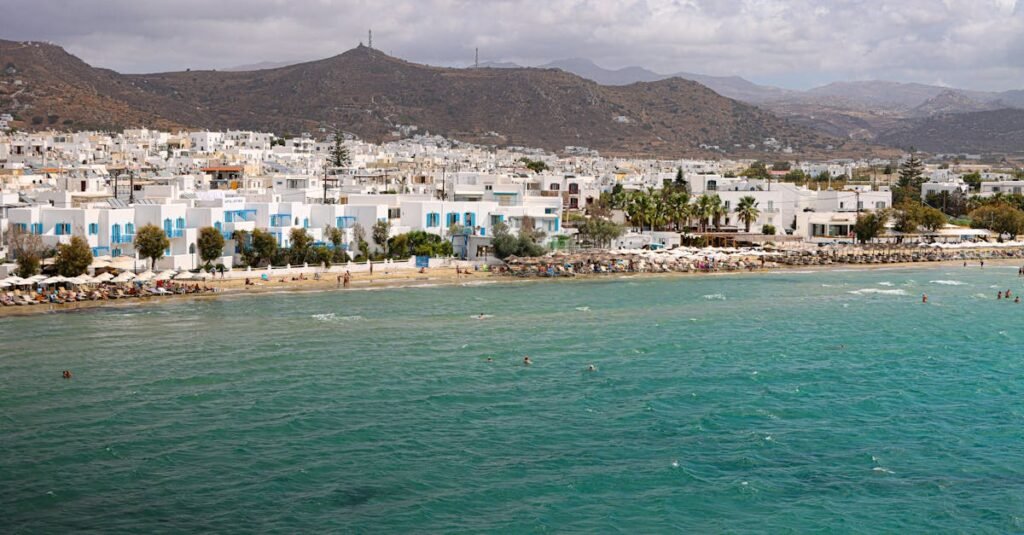
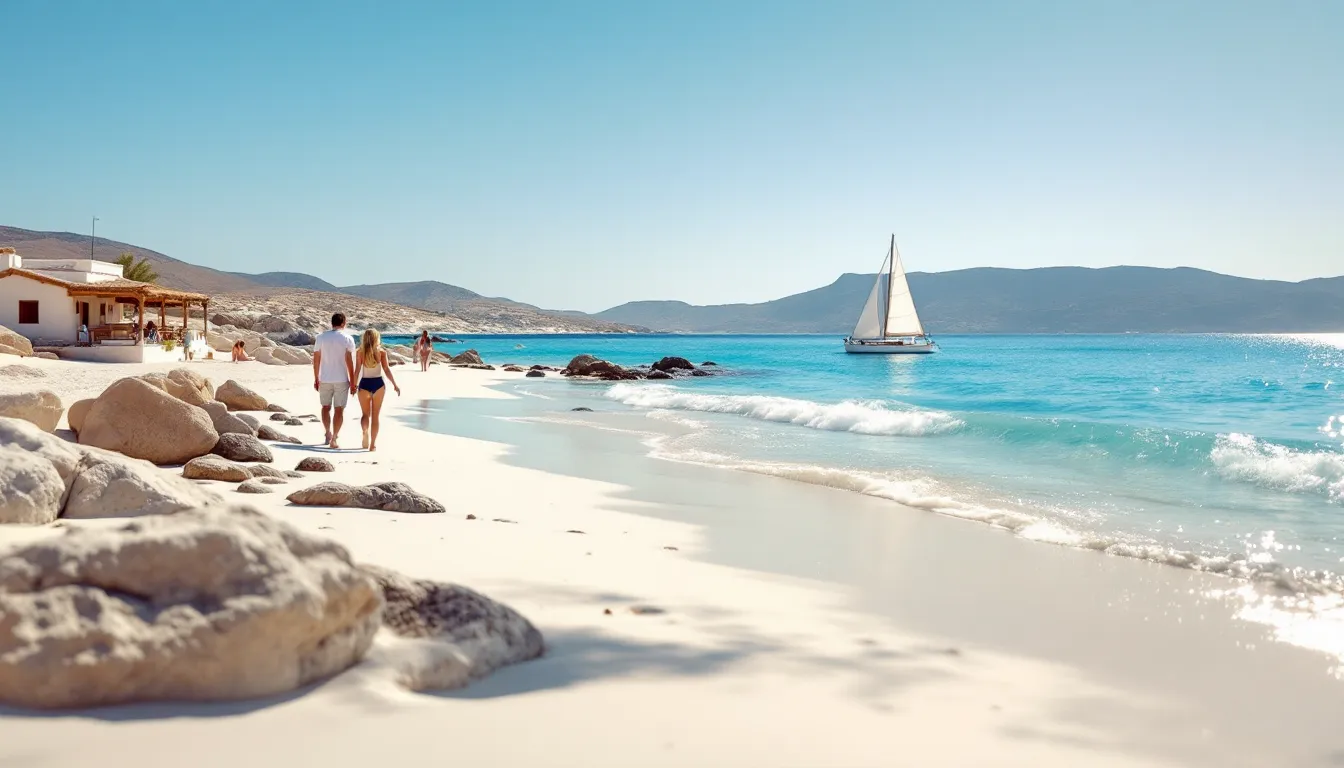
Picture this: you’re walking along a curve of soft, pale-gold sand, the Aegean is doing that glassy-turquoise thing it does in postcards, and behind you, goats are picking their way through hillside terraces and olive trees.
There’s no thumping beach club soundtrack, no line of cruise ship buses, just the distant clink of plates from a family-run taverna.
That’s the rhythm of Naxos.
Naxos doesn’t shout the way Mykonos or Santorini does. It’s quieter, greener, and somehow more grounded.
It’s the kind of place where you can spend the morning swimming, the afternoon getting lost in alleys scented with jasmine and grilled octopus. The evening includes talking to a local winemaker about how much the island has (and hasn’t) changed.
If you’re craving an island that balances beautiful beaches with real Greek life, this Naxos Greek island travel guide will walk you through when to go, how to get around, where to stay, what to eat, and a simple 3–5 day itinerary to make it all feel effortless.
Why Naxos Belongs On Your Greece Shortlist
Should You Visit Naxos If You Love Culture And Slow Travel?
If you’re the kind of traveler who wants more than just a pretty beach, who actually enjoys wandering local markets, sitting in village squares, and learning why a dish is cooked a certain way, Naxos will feel like a match.
It’s the largest and greenest island in the Cyclades, which means you get miles of coastline and a mountainous interior stitched with olive groves, citrus trees, and tiny villages. Compared with its glitzier neighbors, Naxos is:
- More affordable – accommodation, car rentals, and meals are generally cheaper than Mykonos and Santorini.
- More lived-in – it’s a working island with farming, cheesemaking, and everyday Greek life happening year-round.
- Less performative – you’ll see some Instagram moments, sure, but it rarely feels like a set.
Naxos belongs on your Greece shortlist if you:
- Want great beaches without feeling like you’re in a beach club commercial.
- Like mixing chill days with light hikes, history, and village exploring.
- Care about food, especially local cheese, potatoes, and farm-to-table tavernas.
- Are curious about slower, longer stays or remote work by the sea.
If that’s you, keep Naxos very close to the top of your list.
When To Visit Naxos And How Long To Stay

Best Months For Sun, Swimming, And Fewer Crowds
Naxos is technically visitable year-round, but for that sweet spot of warm weather, swimmable seas, and fewer crowds, aim for:
- May–June – Long, sunny days, wildflowers still around in May, sea warming up, prices a bit lower.
- September–early October – Sea is at its warmest after summer, kids are back in school, and the island exhales after August.
July and August are fun if you love buzz and don’t mind higher prices and more wind (the meltemi). Winter is quieter, more local, and better for hikers and slow travelers who don’t care about daily beach time.
How Many Days You Actually Need On Naxos
- 3 days is enough to hit the essentials: Naxos Town (Chora), a couple of standout beaches, and a mountain village or two.
- 5 days is ideal if you want to:
- Add a hike (like Mount Zas)
- Squeeze in a boat trip or day trip to nearby islets
- Actually relax instead of racing from spot to spot
If you’re working remotely or slow traveling, you could happily base yourself here for 2–4 weeks, using weekends to explore deeper inland and nearby islands.
Getting To Naxos And Getting Around The Island
Ferries, Flights, And Island-Hopping Combos
You’ve got a few easy options to reach the island:
- From Athens
- Ferry from Piraeus or Rafina: 3.5–5.5 hours depending on whether you take a high-speed or regular ferry. High-speeds cost more but save time.
- Flight: 40–45 minutes from Athens to Naxos Airport (JNX). Convenient if you’re short on days, but book early, seats sell out.
- From other islands
Naxos is a natural stop on a Cyclades island-hopping trip. Popular combos include:
- Santorini → Naxos → Paros
- Mykonos → Naxos → Small Cyclades (Koufonisia, Schinoussa)
Ferries between these islands are frequent in summer. Use sites like FerryHopper to compare routes, prices, and times.
Driving, Buses, And When You Really Need A Car
Once you’re on Naxos, you’ve got options:
- Renting a car (top recommendation)
If you plan to visit mountain villages, more remote beaches, and historic sites like the Temple of Demeter, a car makes life much easier.
- Typical cost: around €35–€60/day in high season (cheaper shoulder season).
- Roads are generally good, but expect some narrow village lanes and curves.
- Buses
The island’s bus network is surprisingly decent for key routes: Chora to Agios Prokopios, Agia Anna, Plaka, and some villages like Halki and Apiranthos. Great if you’re staying near town and doing day trips.
- Scooters/ATVs
Fun near Chora and the main beaches, but less ideal for longer inland journeys, especially if you’re not used to Greek island driving or winds.
- Walking
Naxos Town is compact and very walkable. You can stay in Chora and do a lot on foot, especially if you stick to beaches reachable by bus.
Bottom line: If you want to go beyond the obvious, rent a car for at least one or two days. If you’re happy with a more laid-back, beach-and-town kind of trip, buses and your own two feet work fine.
Where To Stay On Naxos: Best Areas For Different Travel Styles
Staying In Naxos Town (Chora): Walkable And Lively
Chora is Naxos‘ main town and where the ferries arrive. Staying here gives you:
- Easy access to restaurants, bars, and shops
- A short walk to the Portara (Temple of Apollo) and Old Town
- Bus connections to beaches and villages
It’s a great base if you:
- Don’t want to rent a car the whole time
- Like to go out at night without worrying about driving
- Enjoy staying where there’s a bit of buzz but still local life
Look for small boutique hotels, guesthouses, or apartments tucked into the lanes above the port, or modern stays just a short walk back from the waterfront.
Beach Towns Like Agios Prokopios And Plaka
If you want to wake up, grab a coffee, and be on the sand in five minutes, the stretch of coast south of Chora is your spot. The main options are:
- Agios Prokopios – Long, beautiful sandy beach with turquoise water, sunbeds, cafes, and a relaxed but lively feel.
- Agia Anna – A little smaller, with a modest harbor and a cozy vibe.
- Plaka Beach – Wide, open, more spaced out. Feel shifts from organized beach bars to almost wild dunes the farther you go.
These areas suit you if you’re dreaming of lazy beach days and sunset swims, but still want tavernas and mini markets at your doorstep.
Staying In A Village For An Authentic, Quiet Base
For a different kind of Naxos experience, base yourself in the mountain villages.
- Halki (Chalkio) – Former capital, pretty neoclassical houses, a few great tavernas, and the famous Kitron distillery.
- Apiranthos – Marble-paved alleys, a bit more dramatic and traditional-feeling, cooler in summer.
Staying inland makes sense if you:
- Prefer quiet nights and cooler temperatures
- Want to walk out your door into village life instead of tourist strips
- Plan to rent a car or don’t mind bus schedules
You can always day trip to the beaches, then come “home” to a village square and watch locals taking their evening strolls.
Best Things To Do On Naxos: From Beaches To Mountain Villages
Iconic Landmarks: Portara, Old Town, And Castles
Start with the Portara, the massive marble doorway from a 6th-century BC Temple of Apollo that was never completed. It sits on a tiny islet by the port, connected by a stone causeway.
- Go at sunset – the light behind the Portara is pure drama.
- Also go once in the morning when it’s quiet and the sea is calm.
Then, wander the Old Town (Kastro):
- Climb up through whitewashed alleys lined with bougainvillea.
- Explore the Venetian castle area, small museums, and hidden piazzas.
- Duck into courtyards where time genuinely feels slower.
Best Beaches On Naxos For Different Vibes
You’re spoiled for choice here. A few standouts:
- Agios Prokopios – Clear, shallow water and golden sand. Great for a first beach day.
- Plaka Beach – Long and relaxed: you can walk until it’s almost empty. Perfect if you want space and fewer people.
- Mikri Vigla – Famous for wind- and kitesurfing thanks to the meltemi winds.
- Aliko Beach – A bit wilder, with cedar trees and carved sand dunes nearby. Bring snacks and water.
If you have a car, just driving the coastal road and pulling over at random coves is half the fun.
Mountain Villages, Hikes, And Inland Adventures
Leave the coast for a day and head into the hills. Highlights include:
- Halki – Stroll neoclassical streets, visit the Vallindras Kitron Distillery, and grab lunch in the shady village square.
- Apiranthos – Known as the “marble village,“ with stone houses, small museums, and panoramic views.
- Filoti – Good base for hiking Mount Zas (Zeus), the highest peak in the Cyclades.
- Temple of Demeter – An elegant ancient sanctuary among fields: combine it with a village tour.
If you enjoy light to moderate hiking, the Mount Zas trail rewards you with sweeping views across the Aegean, especially clear on less windy days.
Water Sports, Sailing, And Day Trips
If you get restless lying on the beach, Naxos has plenty to keep you moving:
- Windsurfing and kitesurfing at Mikri Vigla
- Kayaking or SUP along calmer coastal stretches
- Boat tours to sea caves like Rina Cave, with swimming stops in impossibly blue water
- Day trip to Koufonisia or other Small Cyclades islands, where life slows down even more
Booking a small-group boat trip is a nice way to see Naxos from the water and reach spots you’d never see by car.
Savoring Naxos: Food, Wine, And Local Culture
What To Eat On Naxos: Cheeses, Potatoes, And More
Naxos quietly has some of the best food in the Cyclades. Because the island is so fertile, a lot of what you eat doesn’t travel far.
Make a point to try:
- Naxian cheeses – Arseniko, graviera, and xinomyzithra show up in salads, baked dishes, and cheese plates.
- Naxos potatoes – The island’s pride: look for them roasted with herbs, fried in olive oil, or cooked under meat.
- Fresh seafood – Grilled octopus, fried calamari, and the catch of the day.
- Local meats and stews from mountain villages.
You’ll notice that even simple things, like tomatoes, cucumbers, and bread, often taste better here. It’s the combination of good soil, sun, and people who still care about how food is grown.
Tavernas, Beach Bars, And Where To Try Local Spirits
In Chora, you’ll find a mix of waterfront tavernas, more hidden courtyards, and modern spots with natural wine lists. Along Agios Prokopios and Plaka, the tavernas spill onto the sand.
For drinks, ask for:
- Kitron – A local liqueur made from citron leaves, often served as a digestif or in cocktails.
- Local wine – Several small producers on Naxos and nearby islands make interesting whites and rosés that pair perfectly with seafood.
Look out for places where the owner is also your server, proudly telling you what’s from their own land. Those are usually the meals you remember.
Connecting With Locals Through Food And Traditions
If you want a deeper connection than “table for two at 8,“ try:
- Visiting a village during the evening volta – locals strolling, chatting, and kids playing.
- Joining a cooking class or farm visit where you help prepare a traditional meal.
- Asking your host or server, “What would you eat tonight?“ and ordering that.
Naxos isn’t showy about its culture. It’s in small things: the way an older man waters his vines at dusk, or a woman bringing an extra plate “on the house“ because you finished every bite.
Naxos For Remote Workers And Longer Stays
Wi-Fi, SIM Cards, And Where To Work From
If you’re traveling with your laptop, Naxos is one of the easier Greek islands to balance work and beach.
- Wi-Fi – Most hotels, guesthouses, and apartments in Chora and the main beach towns have reliable Wi-Fi suitable for calls and moderate uploads.
- Mobile data – Pick up a Greek SIM (Cosmote, Vodafone, or Nova) in Athens or Chora. 10–20GB packages are usually affordable and fast enough for tethering.
For work-friendly environments:
- Chora has several cafes where working for a couple hours is normal, especially in shoulder season.
- Beach towns have slower, more relaxed vibes, good for lighter work days, email catch-up, and creative thinking.
Costs, Seasonality, And Living A Little Like A Local
Compared with bigger-name islands, Naxos is kind on the budget, especially off-peak.
Approximate ranges (per person, per day, excluding flights):
- Budget traveler: €50–€80 (simple room, bus, tavernas, a drink or two)
- Mid-range: €90–€150 (nicer apartment or hotel, car rental days, boat trip, cocktails)
Come in May–June or September–October and you’ll likely pay less for accommodation and car rentals, and have a calmer environment that suits deep work.
If you stay longer than a week, you’ll naturally fall into a rhythm: morning swims, a few hours of work, long lunches, a siesta, and evening strolls in town or a village. It’s an easy place to experiment with living a little more like a local and a little less like a tourist on a countdown.
Practical Tips And A Simple 3–5 Day Naxos Itinerary
3–5 Day Naxos Itinerary For Curious, Independent Travelers
Use this as a flexible outline, you can swap days around depending on weather and energy.
Day 1 – Arrival, Chora, And Portara Sunset
- Check into your stay in Chora or nearby.
- Wander the Old Town and Kastro, get lost in the alleys.
- Early dinner or meze, then walk to the Portara for sunset.
Day 2 – Beach Day: Agios Prokopios And Plaka
- Take a bus or drive to Agios Prokopios for a lazy morning swim.
- Walk or hop further down to Plaka Beach for the afternoon.
- Dinner at a beach taverna with your feet (almost) in the sand.
Day 3 – Mountain Villages And Temple Of Demeter
- Rent a car if you haven’t yet.
- Visit Halki, tour the Kitron distillery, and linger over lunch.
- Continue to Apiranthos for marble streets and mountain views.
- Stop at the Temple of Demeter on your way back.
If you have 5 days, add:
Day 4 – Hike Or Inland Exploration
- Hike Mount Zas from Filoti (start early for cooler temps).
- Reward yourself with a long lunch in a village taverna.
Day 5 – Boat Trip Or Koufonisia Day Trip
- Join a small-boat cruise to Rina Cave and hidden coves or
- Take a ferry/day trip to Koufonisia for insanely clear water and a tiny-island vibe.
Money, Safety, And What To Pack For Island Life
A few final notes to keep your Naxos days smooth:
- Money – ATMs are widely available in Chora and main beach areas. Many places accept cards, but small tavernas and kiosks may prefer cash.
- Safety – Naxos is generally very safe, with a low-key atmosphere. Usual common-sense rules apply.
- Packing essentials:
- Light layers (evenings can be breezy, especially with the meltemi)
- Reef-safe sunscreen and a hat, Aegean sun is no joke
- Comfortable walking sandals or shoes for village lanes and light hikes
- A light scarf or cover-up for windier days and church visits
Give yourself enough space in your schedule to do nothing occasionally. Some of your best Naxos memories will be the unplanned hours.