
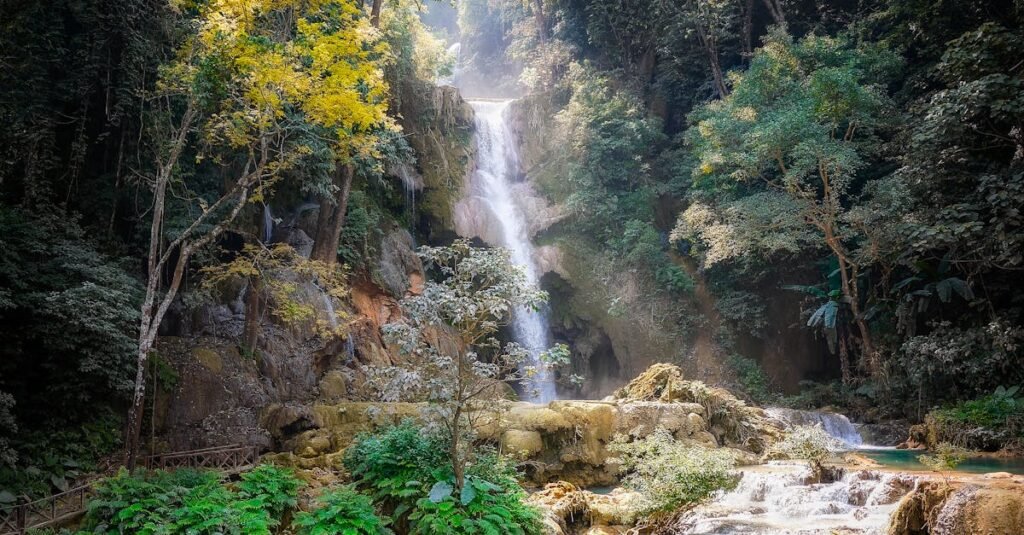
You don’t go to Laos to rush.
You go to watch the sun melt into the Mekong from a wooden riverside deck. To drift past jungle-covered karst cliffs in a longtail boat. To wake early in Luang Prabang‘s blue dawn as saffron-robed monks collect alms in near silence.
If you’ve bounced around Thailand or Vietnam and felt a bit overwhelmed by the pace, a well-designed Laos travel package can be your reset button: slower, softer, and surprisingly affordable, without losing the sense of adventure.
This guide walks you through when to go, how long to stay, what kind of package fits your style (from temples to trekking), real-world budgets, and how to travel in a way that’s both smooth and sustainable.
Think of it as your blueprint for planning an authentic, slow journey through Laos, whether it’s your first time in Southeast Asia or your fifth.
Why Laos Belongs On Your Travel Radar

If you’ve ever scrolled through Southeast Asia content and thought, “This looks amazing, but also… a lot,“ Laos might be your sweet spot.
Laos is landlocked, laid-back, and often overshadowed by its neighbors, which is exactly why it feels so special. You’ll find:
- UNESCO-level culture without the crowds – Luang Prabang‘s temple-studded old town feels like a living museum, but you can still find a quiet corner at sunset on Mount Phousi.
- A river that sets the rhythm – The Mekong isn’t just a backdrop: it’s the heartbeat of the country. Slow boats, floating villages, riverside cafés. You feel yourself syncing to its pace.
- Landscapes that invite you off the grid – From the karst mountains of Vang Vieng to the jungle in the north and the 4,000 Islands in the south, it’s easy to step away from the main drag.
- Genuine warmth – Interactions tend to feel less transactional. In small towns, you’ll still meet people curious about where you’re from rather than what you’ll buy.
A thoughtfully curated Laos travel package helps you tap into this side of the country: steering you toward local markets, homestays, and family-run guesthouses instead of just ticking off the obvious temples and waterfalls. It’s not about being “on a tour“: it’s about letting someone who knows Laos well design a route that fits your energy, budget, and curiosity.
Best Time To Visit Laos And Trip Length Ideas

Weather, Festivals, And Crowds By Season
For most travelers, the dry season from November to April is the sweet spot:
- November–February: Cooler (think mid-60s to low-80s °F), clear skies, ideal for trekking, motorbiking, and waterfall days. Also the busiest, but “busy Laos” is still quieter than most neighboring countries.
- March–April: Hotter and hazier in some areas due to regional burning practices. Still fine if you’re planning more river-based or city-focused time.
- May–October (wet season): Short, intense showers, especially in the afternoon. In exchange, the rice fields glow neon green, waterfalls like Kuang Si are powerful, and crowds thin out. If you don’t mind some rain, it can be incredibly lush and photogenic.
Key festivals you might want to time a Laos travel package around:
- Lao New Year (Pi Mai) – Mid-April. Water fights, parades, temple rituals, and a contagious sense of joy.
- That Luang Festival – Around November in Vientiane. Centered around the golden Pha That Luang stupa, full of processions and candlelit ceremonies.
Packages during festivals may cost a bit more and book out earlier, but the cultural payoff is huge.
How Long To Spend In Laos
If you’re flying from the US, you’ll want to make the jet lag worth it:
- 7 days – Perfect for a highlights package: Luang Prabang, Vang Vieng, and Vientiane. You won’t see everything, but you’ll catch the “essence” of Laos.
- 10–14 days – Adds space for northern villages (like around Oudomxay or Luang Namtha), Pak Ou Caves, or a slower Mekong cruise.
- 3 weeks – Enough for a deep dive: the Plain of Jars in Xiengkhouang, the 4,000 Islands in the south, maybe the Bolaven Plateau coffee region.
If you’re a remote worker or digital nomad, you could easily base yourself in Luang Prabang or Vientiane for a month and layer in short side trips. Many package providers now offer semi-structured options where you get airport transfers, a few day tours, and then long stretches of unscheduled time to work, wander, and settle in.
Popular Laos Travel Package Styles (And Who They’re For)
Classic Highlights Packages
If this is your first time in Laos (or even Southeast Asia), a classic highlights Laos travel package is a solid starting point.
Common stops:
- Luang Prabang – Temples, night market, Kuang Si Falls, Pak Ou Caves, alms-giving ceremony.
- Vientiane – Pha That Luang, Patuxai Monument, riverside night market.
- Vang Vieng – Blue lagoons, caves, hot air balloons, karst mountain views.
These usually run 6–8 days, include transport between cities, comfortable hotels or guesthouses, and a mix of guided tours and free time. They work well if you want structure but still like a few open afternoons to café-hop or wander.
Best for you if: you’re short on time, traveling with a partner or friend, and want to see the “big three” without planning every detail yourself.
Off-The-Beaten-Path And Nature-Focused Trips
If you read the word “trekking” and your heart does a little jump, look for nature-focused or off-the-beaten-path packages.
These might include:
- Nam Ha National Protected Area – Jungle treks, river crossings, and hill-tribe village stays.
- Luang Namtha & Muang Sing – Great bases for multi-day hikes, biking, and cultural encounters.
- Gibbon Experience (near Bokeo) – Zip-lines, treehouses, and forest canopy views (more popular, but still pretty wild).
Expect simple accommodations on trekking days (think: bamboo huts, mattresses with mosquito nets), local guides, and lots of time outdoors. Packages often build in rest days in a town with nice cafés and massages, because your legs will need it.
Best for you if: you prioritize nature over nightlife and love a trip where your hiking boots earn their luggage space.
Slow Travel And Digital Nomad-Friendly Stays
A newer wave of Laos travel packages is designed for people who don’t just want to pass through, they want to pause.
Slow-travel or digital-nomad-friendly options might include:
- Long-stay discounts in apartments or boutique guesthouses in Luang Prabang or Vientiane.
- A few structured cultural experiences (like a cooking class, weaving workshop, or day trip to Kuang Si) bundled with weeks of free time.
- Coworking or café recommendations, local SIM/eSIM help, and airport transfers to make landing soft.
Wi-Fi in larger cities and tourist towns is generally good enough for online work (video calls included), though you’ll want a backup hotspot for more rural days.
Best for you if: you work from your laptop, crave routine and adventure, and like the idea of learning your local noodle stall owner’s name.
Adventure, Trekking, And River-Based Itineraries
For active travelers who get restless sitting still, look for adventure-focused packages that lean into Laos’ rivers, caves, and cliffs.
These can bundle:
- Kayaking or tubing near Vang Vieng (these days more chill and scenic than the old party scene).
- Multi-day Mekong slow boat trips, often between Luang Prabang and the Thai border.
- Caving near Thakhek or in central Laos.
- Cycling between small villages or around the 4,000 Islands.
These packages are ideal if you want logistics (gear, guides, safety, and transfers) handled, but you still want that sense of “I actually did something today“ when you collapse into bed.
Best for you if: you love coming home from a trip with sore muscles and wild stories.
Sample Laos Itineraries: From One Week To Three Weeks
7-Day Highlights: Luang Prabang, Vang Vieng, And Vientiane
A typical 7-day Laos travel package might look like this:
Day 1–2: Vientiane
Arrive, adjust, explore Pha That Luang, Patuxai, and the riverside night market. Sunset beers along the Mekong, then early to bed.
Day 3–4: Vang Vieng
Drive through countryside to Vang Vieng. Kayak or tube along the Nam Song River, explore caves, and take in sunset from a riverside bar. Optional sunrise hot air balloon ride if your budget allows.
Day 5–7: Luang Prabang
Temples, Kuang Si Falls, night market, and a slow Mekong cruise to Pak Ou Caves. One early morning for almsgiving, one evening for a rooftop bar view.
This is the ideal “tester trip” if you’re curious about Laos but limited to a week of PTO.
10–14 Days: Adding Northern Villages Or Southern Islands
With 10–14 days, you can add a layer of depth:
Option 1 – Northern Focus:
- Spend extra nights in Luang Prabang.
- Add Oudomxay or Luang Namtha for trekking and village visits.
- Possible overnight in a homestay for a window into rural life.
Option 2 – Southbound:
- After Vientiane, head to Pakse.
- Explore the Bolaven Plateau (waterfalls and coffee farms).
- Continue to the 4,000 Islands (Si Phan Don) for hammocks, river life, and bike rides.
A two-week package can balance movement and rest: a couple of big transfer days, then clusters of 2–3 nights in each spot so you’re not constantly packing.
3 Weeks: Deep-Jump into Culture, Nature, And River Life
If you have three weeks, you can really slow down.
A sample flow:
- Luang Prabang (5–6 nights) – Time to actually get bored (in a good way): repeat your favorite café, find a go-to noodle stall, do a second waterfall day.
- Northern Laos (4–5 nights) – Nam Ha treks, Muang Sing, or a Gibbon Experience-style zip-line adventure.
- Xiengkhouang (2–3 nights) – Visit the haunting Plain of Jars, learn about the region’s war history and resilience.
- Vientiane (2 nights) – Reset, good food, riverside walks.
- South (5–6 nights) – Bolaven Plateau and the 4,000 Islands.
Many operators will customize a three-week Laos travel package based on whether you skew more toward culture (markets, temples, crafts) or adventure (treks, paddling, motorbikes). That’s where asking for tweaks really pays off.
What To Budget For A Laos Trip
Flight, Accommodation, And Transport Costs
From the US, your biggest single cost is the flight to Southeast Asia.
- Round-trip to the region (into Bangkok, Hanoi, or directly into Luang Prabang/Vientiane): typically $800–$1,400 depending on season and departure city.
- Regional flights into Laos from hubs like Bangkok or Hanoi: around $80–$250 one-way.
Once you’re on the ground, Laos is generally very affordable:
- Guesthouses & mid-range hotels: $20–$60 per night (double room, A/C, private bathroom).
- Boutique or higher-end stays: $80–$200+ per night.
- Private transfers or minivans between major towns: $10–$30 per person.
Many Laos travel packages bundle accommodations and transport, which helps you see the real cost upfront instead of nickel-and-diming yourself later.
Food, Activities, And Hidden Daily Expenses
One of the joys of Laos: you can eat well on very little.
Rough daily estimates per person:
- Food:
- Street food / local spots: $1.50–$4 per meal.
- Tourist restaurants and cafés: $5–$10 per meal.
- Coffee/tea/fruit shakes: $1.50–$3.
- Activities:
- Entrance fees (waterfalls, caves): $3–$7.
- Group day tours: $25–$60.
- Cooking classes or specialized experiences: $35–$70.
Hidden-but-real expenses:
- Laundry: $1–$2 per kilo.
- SIM/eSIM or data packages: $5–$20 depending on your plan.
- Occasional visa or entry fees, depending on your passport and border entry.
Comfortable mid-range daily spend (food + local transport + activities) often lands around $20–$40/day when you’re not splurging.
Package vs. DIY Costs: What Actually Saves Money
A lot of travelers assume DIY is always cheaper. In Laos, that’s sometimes true, but not always.
Where packages can save you money:
- Group rates for boats, vans, and tours (you might pay less per person than piecing it together solo).
- Bundled multi-day itineraries (e.g., a 7-day highlights package that includes all transfers, guides, and some entrances) which can end up 20–40% cheaper than booking each segment separately.
Where DIY might win:
- If you’re ultra-flexible, traveling off-season, and comfortable haggling or walking in to book guesthouses.
- If you’re okay with slower, more local buses instead of private or semi-private transfers.
Realistically, a mid-range Laos travel package often lands around $800–$1,500 per week per person (excluding international flights), depending on comfort level and activities. The real benefit, though, isn’t just cost, it’s that your limited time actually goes into experiencing Laos instead of solving logistics in a hot minivan.
How To Choose The Right Laos Travel Package
Questions To Ask Before You Book
Before you put down a deposit on any Laos travel package, ask:
- What exactly is included?
- Accommodation type and star level?
- Transport (private vans vs. public buses, internal flights)?
- Activities, entrance fees, and equipment?
- How many meals per day?
- How big are the groups?
Smaller groups (or private trips) usually mean more flexibility and fewer “herd travel” vibes.
3. Can I customize the itinerary?
Swapping one town for another, adding an extra night, or upgrading a hotel should be possible with good operators.
4. Who are the guides?
Ask if they’re local, what their training is, and whether they’re paid fairly.
5. What’s your approach to responsible tourism?
Look for specific answers: partnering with local homestays, limiting group size on treks, avoiding exploitative wildlife encounters.
Red Flags And Green Flags In Laos Travel Packages
Green flags:
- Clear, detailed itineraries with realistic transport times.
- Transparent pricing and inclusion lists (no vague “some entrance fees“ wording).
- Use of local guides and community-based tourism projects.
- Options for slower, fewer-stop itineraries, not just “10 cities in 8 days.”
Red flags:
- Aggressive schedules that have you changing cities almost every day.
- Unclear policies around cancellations, changes, or weather disruptions.
- Wildlife experiences that involve riding, handling, or performing animals.
- Operators that can’t answer basic questions about pay for local partners or environmental impact.
If an operator is happy to hop on a quick Zoom or phone call and walk you through sample days, that’s usually a good sign that they care about fit, not just the sale.
Essential Tips For Traveling Laos Responsibly And Smoothly
Cultural Etiquette, Safety, And Local Customs
Laos is generally very safe and mellow, but a bit of cultural awareness goes a long way.
- Dress modestly at temples: shoulders and knees covered, hats off inside.
- Almsgiving in Luang Prabang: If you join, do it respectfully, no flash photography in monks’ faces, keep distance, and use proper offerings (your guide can help).
- Body language: Avoid touching people on the head, and don’t point your feet at Buddha statues.
- Alcohol and tubing: The party scene has toned down, but drink responsibly near water and don’t mix heavy drinking with river activities.
Petty theft is rare but not impossible: the usual common-sense habits (keep valuables close, use hotel safes) are enough.
Packing, Connectivity, And Remote Work Considerations
Pack for heat, occasional rain, and varied terrain:
- Lightweight, breathable clothes, a light jacket for cool evenings (especially in the north Nov–Feb).
- Good walking shoes or sandals, plus sturdier shoes if you’ll trek.
- A dry bag or packing cubes for boat days and rainy season.
- Refillable water bottle and a small daypack.
For connectivity:
- Grab a local SIM on arrival or set up an eSIM before you land: data is cheap and speeds are usually solid in cities and main towns.
- Wi-Fi is widely available in guesthouses, cafés, and hotels. For remote work, schedule calls when you’re in bigger hubs (Luang Prabang, Vientiane, Pakse) rather than tiny villages.
Tell your package provider upfront if you need reliable internet for work, they can steer you away from multi-day treks during your busiest week.
Traveling Sustainably And Supporting Local Communities
Laos is still in a relatively early stage of mass tourism compared to its neighbors, which gives you a chance to set a good example.
- Travel slow: Fewer bus rides, more nights in each place. It’s easier on you, the environment, and local communities.
- Choose homestays and local guesthouses where more of your money stays in the village.
- Skip single-use plastics: refill your bottle at hotels or filtered-water stations when you can.
- Shop small: buy textiles, coffee, and crafts from markets and cooperatives, not just the big souvenir shops.
- Ask permission before photos, especially of children and in rural villages.
Many Laos travel packages now highlight their community partners and sustainability efforts. If that matters to you, and it probably does if you’ve read this far, pick the operator whose values actually match yours, not just their marketing copy.