
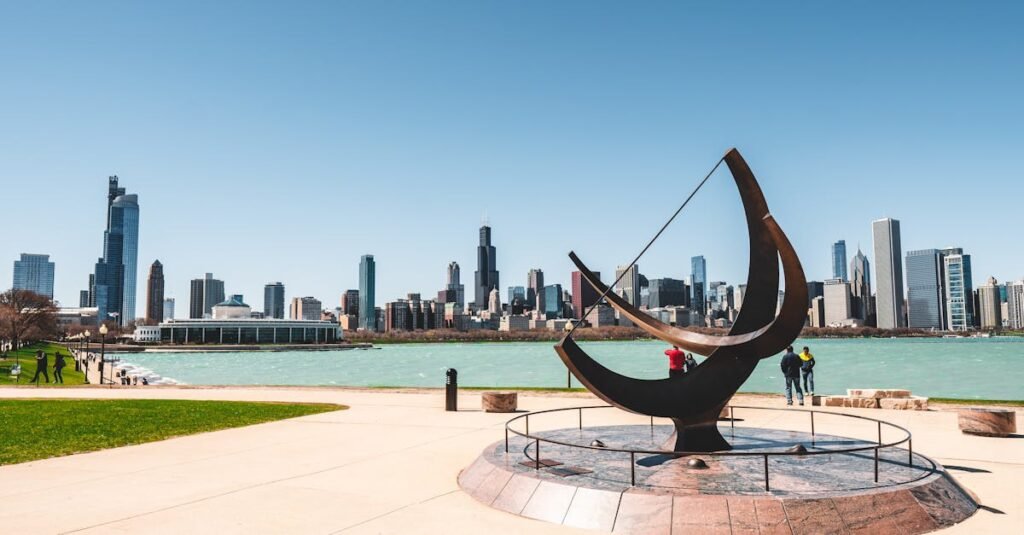
If you’re chasing the best Chicago tourist places but want them with soul, we’ve got you.
We’ve spent days hopping between sparkling lakefront views, mural-streaked alleys, and pizza joints where the cheese pulls feel cinematic.
Below, we blend the hits (yes, “The Bean” and big-sky views) with local neighborhoods, food that tells a story, and smart logistics so you can spend more time exploring and less time stuck in lines.
Landmarks And Architecture Worth Your Time
Millennium Park And “The Bean” Beyond The Selfie
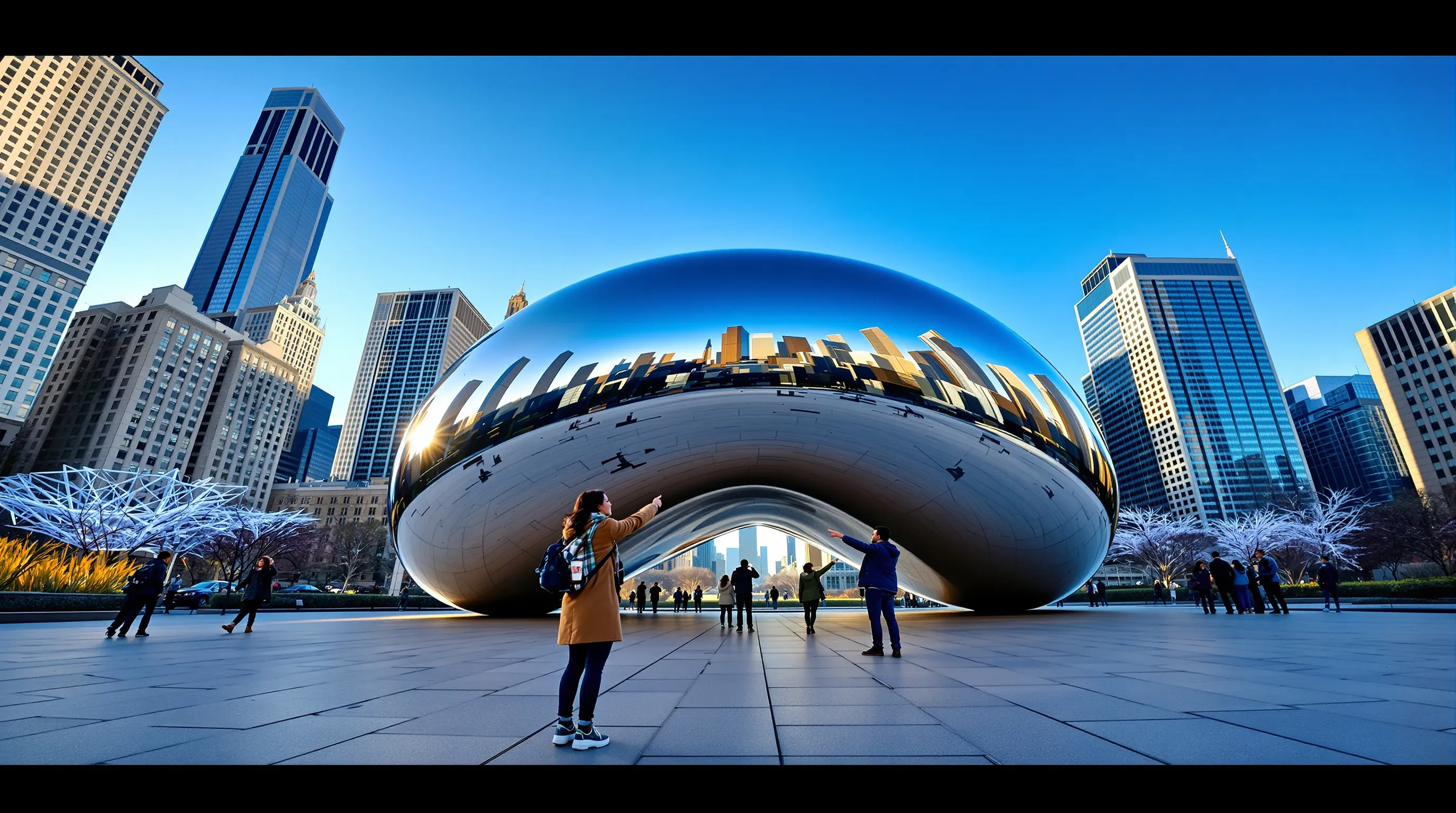
We roll up to Millennium Park early, before 9 a.m., when the city is still rubbing the sleep from its eyes. Cloud Gate (aka “The Bean”) mirrors the skyline and our bundled reflections, but we don’t stop at the selfie. We wander to Crown Fountain, where digital faces blink and spout water in summer, then cross by the swooping Jay Pritzker Pavilion, a Frank Gehry ribbon of steel that hosts free concerts on warm evenings. Lurie Garden is a hush of prairie textures, especially pretty in late spring. It’s free, central, and the perfect warm-up lap for downtown.
Art Institute Highlights For A Focused Visit
The Art Institute of Chicago is huge, world-class, and yes, a little overwhelming. We set a 90-minute plan: start with the Impressionist galleries (Monet’s haystacks glow like they’ve trapped Chicago sunlight), detour to Chagall’s America Windows, then jump into the Thorne Miniature Rooms, which feel like time-traveling through dollhouse-size American and European interiors. Adults run around $32: Illinois residents get discounts, and there are free days for locals. Book timed entry online to skip some of the shuffle.
Chicago Riverwalk And Architecture Boat Tour
The Riverwalk is our reset button: breezy, buzzing, and lined with bars, public art, and steps where people dangle feet above emerald water. We grab a cold brew and walk east to the lake, then backtrack to board an architecture boat tour, still the best crash course on Chicago’s skyline. Expect about 75–90 minutes, with tickets typically $45–$55. Guides weave in stories of the Great Chicago Fire, Art Deco dazzlers, and the modernist heavyweights. Sit up top for the full “wow” effect (bring a layer: the wind off the water can bite).
Willis Tower Skydeck Vs. 360 Chicago
Both deliver killer views. Willis Tower’s Skydeck shoots us up to glass-floored balconies called The Ledge, stand there and your stomach might flip, but the photo payoff is massive. 360 Chicago (in the former John Hancock Center) skews more lake-forward and offers TILT, a glass platform that literally tilts you over Michigan Avenue. Tickets hover around $30–$44 depending on time and add-ons. If we’re prioritizing lake blues and sunset cocktails, 360 wins: if we want “my legs forgot how to leg“ thrills, Skydeck it is.
Neighborhoods To Wander Like A Local
Pilsen: Murals, Galleries, And Mexican Bakeries
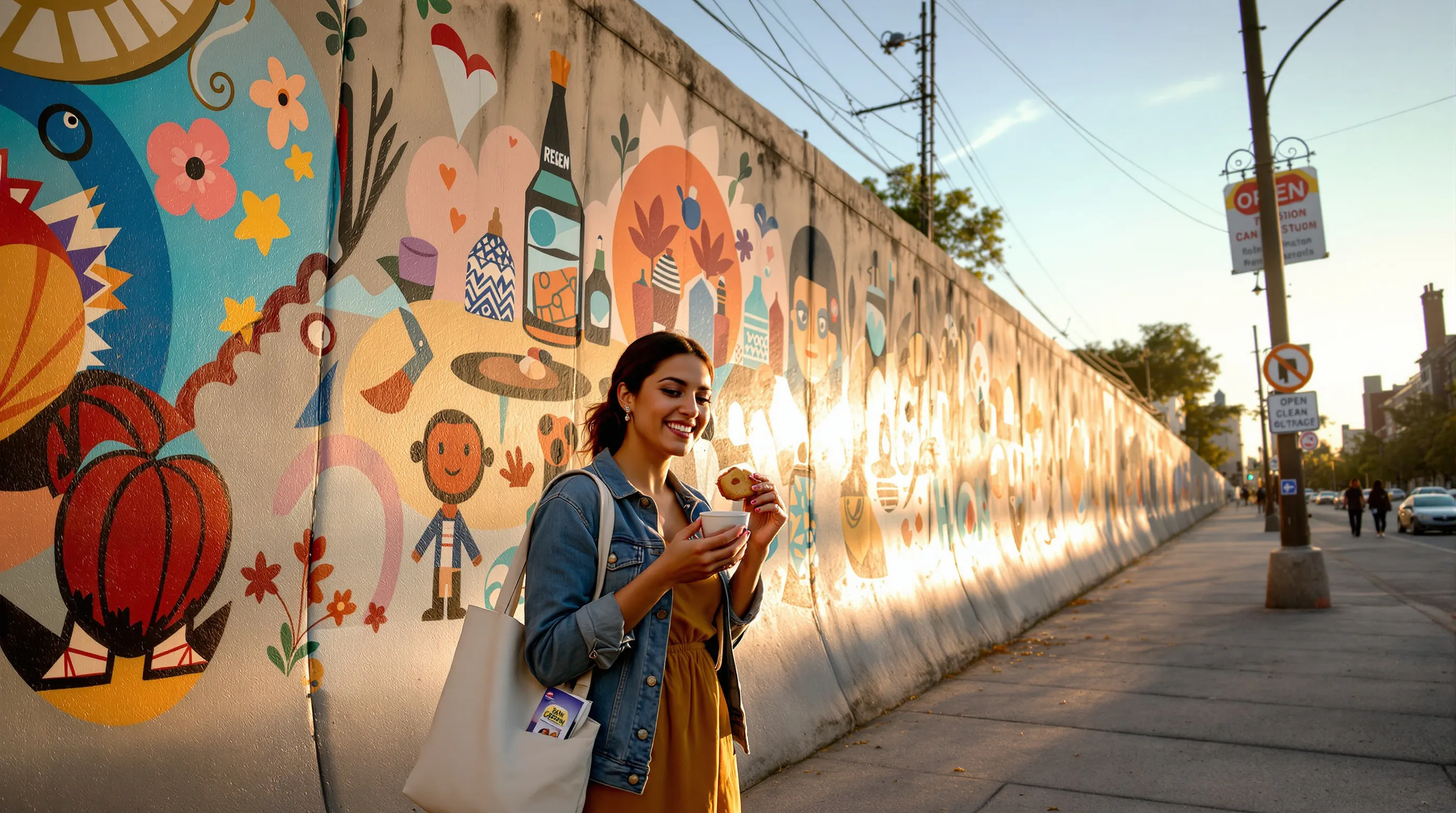
Pilsen hums with color. We follow 16th Street’s mural corridor, then pop into the National Museum of Mexican Art (free, powerful, and beautifully curated). Pan dulce from a neighborhood bakery fuels us, flaky conchas, warm café de olla, and we window-shop design studios and small galleries that change often. Go on a Saturday if you can: things feel extra lively.
Hyde Park: Museum Of Science And Industry And The Lakefront
Hyde Park is where curiosity blooms. The Museum of Science and Industry is a playground for grown-ups and kids, think a captured U-505 submarine and a science-of-storms exhibit. Adult tickets are typically mid-$20s. After, we stroll the lakefront south toward Promontory Point, where the skyline floats like a postcard beyond the water. Bring snacks: linger for golden hour.
Logan Square: Boulevards, Bars, And Weekend Markets
We bike the leafy boulevards, then slide into a cocktail bar with a seasonal menu and a back patio. On summer weekends, farmers markets spill over with flowers, fresh berries, and breakfast tacos. Logan rewards aimless wandering, record stores, indie boutiques, and creative energy that feels both neighborhood-y and new.
Chinatown: Dim Sum, Tea Shops, And Ping Tom Park
Chinatown is our spot for steamer baskets and jasmine-scented air. We time dim sum late morning, then browse tea shops for oolong tastings. Ping Tom Memorial Park opens onto the river with skyline angles and calm paths. It’s especially gorgeous at sunset. Grab egg tarts for the walk back.
Andersonville And Edgewater: Scandinavian Roots And Lakeside Calm
North of downtown, Andersonville mixes Swedish heritage (look for the Dala horses and the Swedish American Museum) with indie bookstores and homey cafés. Keep going to Edgewater for quiet shoreline pockets, Foster Beach and Kathy Osterman Beach feel local, with plenty of room to breathe on weekdays.
What To Eat And Drink In Chicago
Deep-Dish Vs. Tavern-Style Pizza
Let’s settle it: you should try both. Deep-dish at Lou Malnati‘s (or Pequod‘s for caramelized crust) is a sit-down, fork-and-knife event, plan $12–$18 per person depending on toppings. Tavern-style is the city’s weeknight hero: thin, crispy, party-cut squares at neighborhood joints. Order sausage and giardiniera: wash it down with a local beer.
Italian Beef, Maxwell Street Polish, And The Jibarito
Italian beef sandwiches drip with jus and attitude, get it dipped, with sweet peppers or spicy giardiniera. Maxwell Street-style Polish sausages bring snap and onions to the party. And don’t skip the jibarito, a Puerto Rican Chicago original built on fried plantains instead of bread. Expect $9–$14 and instant happiness.
Global Flavors: Puerto Rican, Mexican, Polish, And Vietnamese Classics
Chicago’s neighborhoods are a passport. Hit Humboldt Park for Puerto Rican mofongo, Pilsen and La Villita for tacos al pastor, Avondale or Jefferson Park for pierogi and borscht, and Uptown/Argyle for steaming bowls of pho and crispy bánh mì. We like mixing a splurge dinner with a couple of under-$15 gems.
West Loop For Restaurants: Third-Wave Coffee Across The City
Randolph Street and Fulton Market are where reservations vanish fast, tasting menus, chef-driven casual spots, creative desserts. If we can’t snag a prime-time table, we go early or aim for a late weekday. Coffee-wise, we’re spoiled: Intelligentsia, Metric, Dark Matter, and Sawada Coffee all pour excellent third-wave cups. A latte runs $4–$6 and pairs perfectly with a Riverwalk stroll.
Lakefront And Green Spaces
Lakefront Trail By Bike Or Foot
The 18-mile Lakefront Trail strings together beaches, parks, and skyline reveals that make you stop mid-sentence. We grab Divvy bikes for a point-to-point ride, day passes are typically under $20, and hop off for photos at Oak Street Beach’s S-curve.
North Avenue And Montrose Beaches
North Avenue Beach is the social one, volleyball, music, a beach house scene, while Montrose is more low-key with bird sanctuaries and big-sky space. Both are free, with food stands in summer. Bring sunscreen: Lake Michigan reflects light like a mirror.
Lincoln Park, Conservatory, And Free Zoo
Lincoln Park layers it on: a free zoo where lions nap like royalty, the Victorian-era Conservatory with palm house humidity, and ponds that mirror the skyline. It’s a budget-friendly combo that never feels cheap.
Garfield Park Conservatory And Humboldt Park Lagoon
Garfield Park Conservatory is where we go when we crave green in winter, lush rooms, desert cacti, and a fern room that smells like prehistoric rain. It’s free with suggested donation. Nearby, Humboldt Park wraps a calm lagoon with walking paths and Puerto Rican food trucks in summer.
Remote-Worker Friendly Spots
Chicago Cultural Center And Public Workspaces
When we need a beautiful, quiet place to catch up on email, the Chicago Cultural Center delivers, marble staircases, stained glass (including the famed Tiffany dome), and free entry. Downtown libraries and some park facilities also offer tables and Wi‑Fi.
Harold Washington Library: Quiet Floors And Resources
A few blocks south, the Harold Washington Library’s upper floors are studious and calm, with city views and plenty of outlets. It’s perfect for a research day or an hour between museums.
Coworking Day Passes And Laptop-Friendly Cafes
Coworking day passes run roughly $25–$40 across the Loop, West Loop, and River North. For café work, we rotate between West Loop roasteries and neighborhood spots, order something, keep your footprint small, and you’ll find Chicago baristas are generally laptop-friendly during weekdays.
Logistics, Seasons, And Budget Tips
Getting Around: CTA, Metra, And Divvy Bikes
The CTA trains (the “L”) and buses reach most sights: a 1‑day pass is a budget win, and trains to/from O’Hare and Midway are straightforward. Metra commuter rail helps with suburban day trips. Divvy bikes are everywhere: helmets aren’t required but we bring one anyway. Rideshare fills the gaps at night or in bad weather.
Best Times To Visit And What To Pack
Late May–June and September–October bring mild temps and festival season. Winters are beautiful but real, icy wind, lake-effect snow, so we pack layers, waterproof boots, and a warm hat. Even in summer, a light jacket helps: Lake Michigan can flip the temperature script fast.
Money-Savers: Passes, Free Museum Days, And Neighborhood Eats
City passes can shave costs if you’re hitting multiple big-ticket sights in a couple of days. Check museum calendars for free or discounted days, especially for Illinois residents. Stretch your budget by eating in neighborhoods (breakfast burritos, pho, pizza by the slice) and picnicking on the lakefront.
Safety, Weather Smarts, And Etiquette
We do the usual city smarts: keep valuables zipped, stick to well-lit areas at night, and trust our gut. Watch weather alerts, storms can roll off the lake quickly. On public transit, offer seats to those who need them: on bike paths, signal and pass on the left.
Accessibility Notes For Major Sights
Most headline attractions, Art Institute, Riverwalk sections, Cultural Center, Skydeck, 360 Chicago, offer wheelchair access, elevators, or ramps. Beach accessibility varies by location. If accessibility is key, we check each site’s page for up-to-date details and contact info for accommodations.
Conclusion
Chicago rewards curiosity. The best Chicago tourist places aren’t just the obvious ones, they’re the murals along a Pilsen alley, the hush inside a conservatory in January, the first bite of a jibarito you didn’t know you needed. We come for the architecture and stay for the neighborhoods, for lake light bouncing off glass towers, for conversations over coffee that stretch longer than planned.
Travel Tips / Key Takeaways
- Hit Millennium Park early, then pair it with the Art Institute or Riverwalk.
- Choose one sky-high view: Skydeck for the Ledge, 360 Chicago for lake sunsets.
- Spend at least two half-days in neighborhoods, Pilsen, Chinatown, Logan Square, or Andersonville.
- Eat local: deep-dish plus tavern-style, an Italian beef, and something new-to-you on Argyle or in Humboldt Park.
- Rent Divvy bikes for the Lakefront Trail: bring layers year-round.
- For remote work, use the Cultural Center or Harold Washington Library: snag a coworking day pass if you need calls.
- Save money with museum passes, free days, and neighborhood eats.
If you’re up for it, extend your stay by a day. Chicago opens up when we slow down, one extra morning, one extra market, one extra conversation can change the whole trip.