
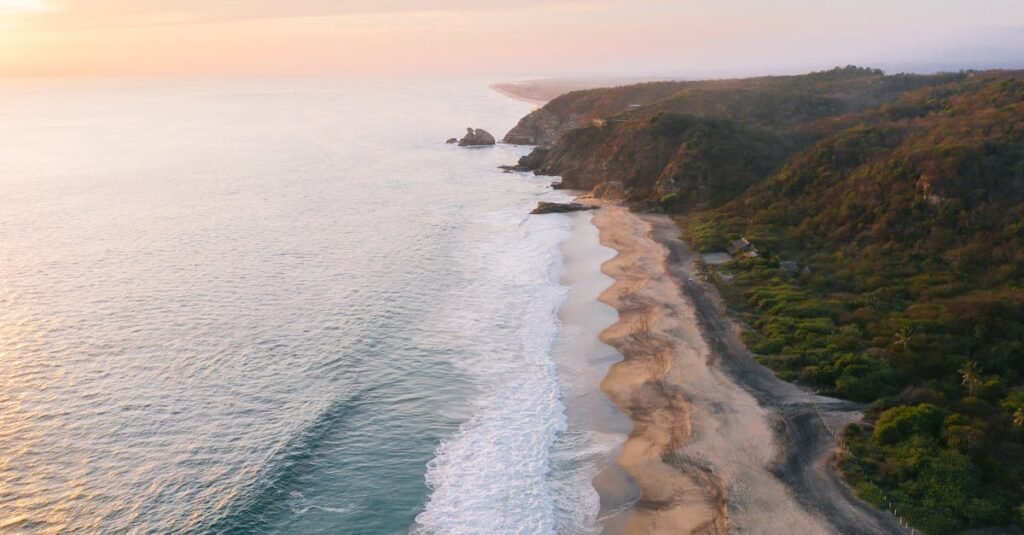
If we could bottle the feeling of Oaxaca, Mexico, it would smell like roasted cacao and copal incense, sound like street musicians in the zócalo, and look like bursts of color on embroidered blouses and hand‑woven rugs.
Oaxaca isn’t the kind of place we “do” in two rushed days between beach towns. It’s a city (and a region) that quietly invites us to slow down: to linger over mole, talk with artisans about their craft, and watch golden light fall across 16th‑century stone.
Whether we’re here for a weeklong escape or setting up our laptops for a month, there’s no shortage of things to do in Oaxaca, Mexico. This guide blends story‑driven inspiration with practical tips so we can actually picture ourselves here, and then go book the trip.
Getting Oriented In Oaxaca City
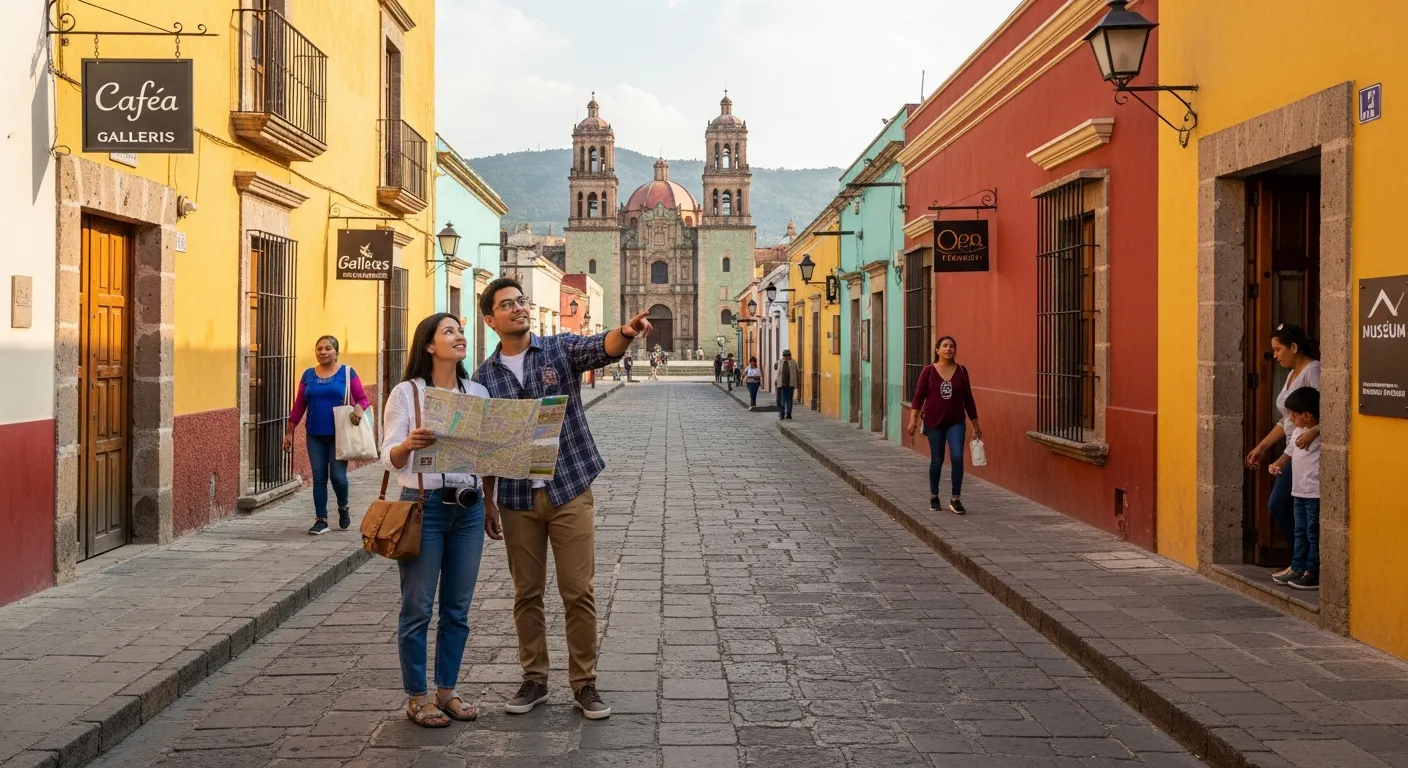
The first thing we notice about Oaxaca City is how small it feels. The historic center is compact, walkable, and easy to navigate, even if we’re directionally challenged before our morning coffee.
Most of what we’ll want to see, markets, museums, churches, galleries, cafés, is clustered between the zócalo (the main square) and Templo de Santo Domingo de Guzmán. Streets run in a grid, so after a day or two, we’re navigating by landmarks: “Let‘s meet near the church, then walk down toward the organic market.”
We like to think of the city in a few loose zones:
- Centro Histórico (Historic Center): Where we’ll likely stay, eat, and wander. Colonial facades, narrow sidewalks, lots of life.
- Santo Domingo & Surroundings: Slightly north, with museums, the ethnobotanical garden, and many of the city’s prettiest streets.
- Barrio de Jalatlaco & Xochimilco: Atmospheric neighborhoods with cobblestone streets, murals, and old aqueducts.
Base ourselves in or near the historic center and we can walk almost everywhere. Taxis and rideshares are affordable for nights out or trips to bus stations, but on most days, our feet are the best mode of transport.
Wander Oaxaca’s Historic Heart On Foot
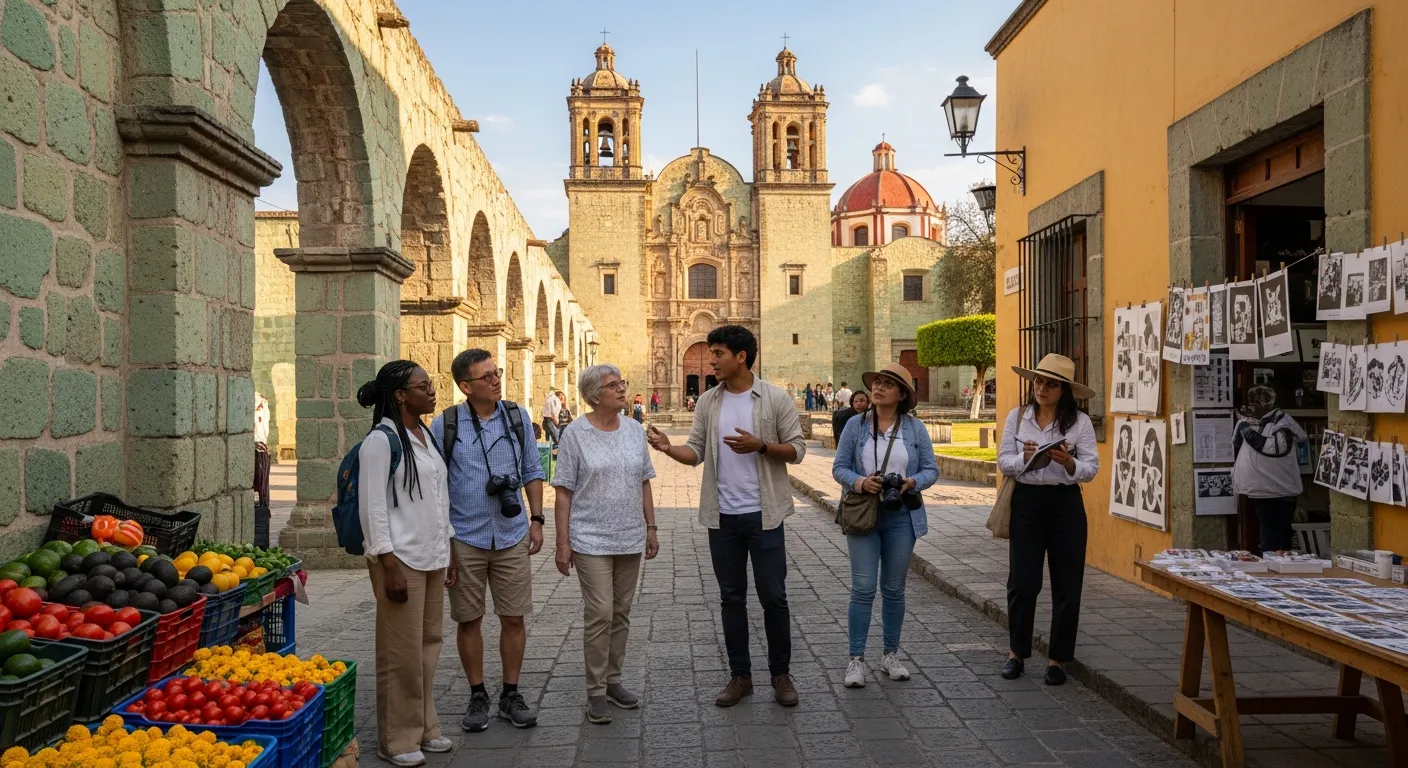
The best introduction to Oaxaca’s soul is a local walking tour. On our first morning, we like to join a free or tip‑based tour run by local guides. They weave us through old aqueducts in Xochimilco, past the colorful stalls of Cosecha Organic Market, and into tiny graphic art shops along Porfirio Díaz that we’d never have noticed alone.
We pause at Templo de Santo Domingo de Guzmán, a baroque church that feels like it was carved from sunlight. Behind it, hidden behind stone walls, is Oaxaca’s famed ethnobotanical garden, a curated slice of the state’s wild diversity. We need a guided tour to enter (there are English tours on select days, usually mornings): it’s worth planning around. Cacti, agaves, and trees from across Oaxaca tell a story of landscape and history, not just plants.
A few steps away, Centro Cultural San Pablo sits inside a beautifully restored 16th‑century Dominican monastery. It’s the kind of place we wander into “just for a minute” and end up staying an hour: sunlit cloisters, rotating exhibits, and, best of all, free daily admission.
As we walk, we watch the city’s daily life unfold: elders chatting on benches, schoolkids sharing snacks, travelers of every background, Black, white, Asian, Latinx, snapping photos in the plaza. Oaxaca feels diverse in who it welcomes, and the city center is where those worlds intersect.
What to do on a first full day on foot:
- Start with a local walking tour (3 hours)
- Coffee and light breakfast near Santo Domingo
- Visit Centro Cultural San Pablo
- Sunset stroll back to the zócalo for people‑watching and live music
Eat Your Way Through Oaxaca’s Food Scene
If food is our love language, Oaxaca is a long, heartfelt letter.
This region is famous for mole, rich, complex sauces that can take days to prepare. We’ll see variations like mole negro, coloradito, amarillo, and more. The best way to understand them isn’t by reading, it’s by tasting.
Night Street Food Tours & Markets
One of the most fun things to do in Oaxaca, Mexico, is join a night street food tour. A local guide leads us through stalls we wouldn’t have the courage (or vocabulary) to approach alone:
- Tlayudas: Giant, crispy tortillas layered with beans, cheese, meat, and salsa, folded like a pizza‑meets‑quesadilla.
- Memelas: Thick tortillas topped with beans, queso fresco, and salsa, perfect for breakfast or a snack.
- Chapulines: Yes, grasshoppers. Crunchy, salty, surprisingly addictive with a squeeze of lime.
By day, we jump into markets like Mercado 20 de Noviembre and Mercado Benito Juárez, wandering aisles of moles, fresh cheese, chocolate, and pan dulce. We can eat a full, satisfying market meal for $3–8 USD, depending on how adventurous we’re feeling.
Take a Cooking Class
If we want to bring Oaxaca home with us, a cooking class is non‑negotiable. Many classes start in a local market, where we shop for ingredients before heading to a family kitchen or small cooking studio. Over several hours, we might:
- Toast chiles on a comal
- Grind spices on a traditional molcajete
- Learn how masa becomes handmade tortillas
Most classes cost around $60–100 USD per person, often including transport, ingredients, and a generous meal with mezcal.
Speaking of Mezcal…
Oaxaca is mezcal country. Instead of just hitting a tourist bar, we look for a mezcalería that pours small‑batch, traditionally produced mezcal, or we join a day trip to a local palenque (mezcal distillery). Sip slowly, ask questions, and remember: good mezcal is meant to be savored, not slammed.
Dive Into Indigenous Culture, Art, And Craft
Beyond the city streets, Oaxaca’s cultural heartbeat lies in its villages. Taking time to visit them respectfully is one of the most meaningful things we can do here.
Teotitlán del Valle – The Weaving Village
In Teotitlán del Valle, families have been weaving for generations. We sit in a courtyard and watch as wool is carded, spun, and dyed using natural ingredients: cochineal insects for deep reds, marigolds for yellows, indigo for blues. Rugs hang like tapestries, each one telling a quiet story.
Buying directly from weavers means our pesos support their craft without middlemen. Prices range widely, from small cushion covers under $40 USD to large statement rugs in the hundreds, but each piece carries the weight of hours of work.
San Martín Tilcajete – The Alebrije Artists
In San Martín Tilcajete, wood carvers create alebrijes, fantastical animal figures, hand‑painted in dizzying detail. We might meet a father sanding figures in the shade while a teenager paints tiny dots and patterns. It’s meticulous, meditative work.
We resist the urge to haggle hard: a few extra dollars to us can make a real difference to a family of artisans.
San Bartolo Coyotepec – Black Pottery
San Bartolo Coyotepec is famous for its barro negro (black clay) pottery, using techniques that date back to ancient Monte Albán. In workshops, we watch as clay is shaped by hand, then burnished to a subtle shine.
Back in the city, we tie it all together with a visit to the Oaxaca Botanical Garden, whose curated landscapes echo the diversity of the villages: agaves, succulents, and towering cacti that show just how varied this region really is. Tours are paid and at set times, but they’re a powerful crash course in the land behind the crafts.
Day Trips And Nature Escapes Around Oaxaca
When the city’s cobblestones start to feel familiar, it’s time to get out into Oaxaca’s wild side.
Hierve el Agua – Petrified Waterfalls & Mineral Pools
About 43 miles from the city, Hierve el Agua looks almost unreal: mineral‑rich infinity pools perched on a cliff’s edge, overlooking a sweeping valley. Below them, a white “waterfall” cascades down the rock, actually mineral deposits formed over thousands of years.
We recommend going early, ideally with a small group tour or private driver. Swim in the cool pools, hike the short loop trail for views of the petrified falls, and bring cash for snacks and entry.
Monte Albán – Ancient City in the Sky
Perched on a hilltop overlooking the valley, Monte Albán is one of Mexico’s most important archaeological sites. Once the powerful center of the Zapotec civilization, it’s now a place where we walk among pyramids, ball courts, and plazas with 360‑degree views.
We can visit on a half‑day tour or DIY with a local bus or taxi. Go early for cooler temperatures and fewer crowds.
Árbol del Tule & Huatulco’s Coast
Closer to the city, the Árbol del Tule, a roughly 2,000‑year‑old Montezuma cypress, anchors a small town just outside Oaxaca. Its trunk is so wide it almost feels like several trees fused together. Combine this with a mezcal stop or craft village visit.
If we have more time, consider heading to the coast. Huatulco National Park offers nine bays, coral reefs, and warm Pacific water. It’s a full trip in itself, but we can pair a week in the city with a few days of snorkeling and beach time if our schedule allows.
Oaxaca For Remote Workers And Slow Travelers
Oaxaca quietly checks a lot of boxes for digital nomads and slow travelers.
- Walkable lifestyle: We can live car‑free. Groceries, cafés, markets, and gyms are usually a 10–15 minute walk from most central apartments.
- Affordability: While prices are rising, we can still eat well and live comfortably without blowing our budget. Simple local meals for $3–8 USD, nice dinners with drinks for $20–35 USD for two.
- Cafés & coworking: From third‑wave coffee shops with strong Wi‑Fi to dedicated coworking spaces, it’s relatively easy to plug in and get work done.
- Culture on tap: Museums, galleries, film screenings, and festivals keep life feeling rich, even on workdays.
If we’re staying a few weeks or months, renting an apartment or long‑stay Airbnb just outside the most touristy streets (but still walkable) hits the sweet spot of local feel and convenience.
We also try to build a rhythm: work in the mornings, explore a neighborhood or take a class in the afternoon, then meet friends, new or old, for mezcal in the evening. Oaxaca lends itself to that kind of balanced, creative life.
Practical Tips For A Respectful, Safe, And Sustainable Stay
Oaxaca deserves more than our presence: it deserves our care.
1. Support local, directly.
Buy from artisans in workshops and markets whenever possible. It keeps more money in local hands and protects traditional crafts.
2. Choose tours thoughtfully.
For places like Hierve el Agua or Monte Albán, use established tour operators who respect local communities and environmental limits.
3. Ask before photographing people.
Whether we’re capturing a weaver at work or a street scene with vendors, a simple “¿Puedo tomar una foto?” goes a long way.
4. Learn a little Spanish.
Even basics, hola, por favor, gracias, show respect. Many locals also speak Indigenous languages: patience and kindness matter more than perfect grammar.
5. Pack for the climate.
Days can be warm, nights surprisingly cool. Comfortable walking shoes are essential: we’ll easily hit 10k+ steps per day.
6. Stay aware but not afraid.
Oaxaca generally feels safe, especially in central areas, but we still use standard big‑city common sense: avoid flashing valuables, take registered taxis or rideshares at night, and keep an eye on drinks.
7. Travel with cultural humility.
We’re guests in a place with deep Indigenous roots. That means listening more than we speak, paying fairly, and remembering that not every space, or ceremony, is meant for our cameras or our presence.