
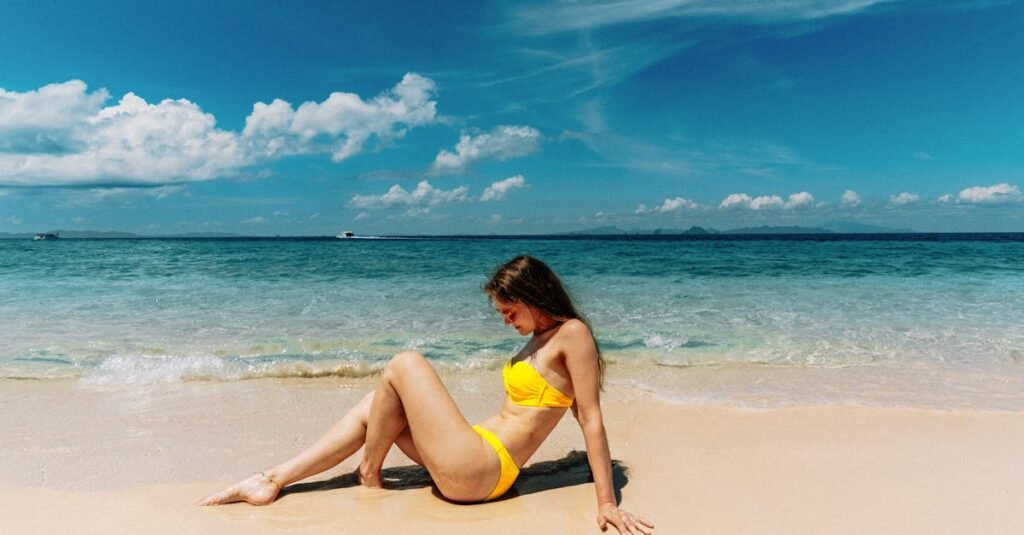
The first time you land in Thailand, the heat and jasmine-scented air hit you at the same time.
Neon tuk-tuks weave past mango carts, monks in saffron robes step quietly through the chaos, and somewhere, not too far away, there’s a beach with water so clear it barely looks real.
With so many Thailand vacation destinations to choose from, it’s easy to feel overwhelmed. Bangkok or Chiang Mai? Phuket or Krabi? Which island is actually chill and which one is spring-break energy in disguise? And if you’re traveling with a laptop, where can you actually get work done between coconut shakes?
This guide walks you through Thailand’s major regions, and a few underrated gems, so you can build a trip that fits your vibe, budget, and travel style, whether you’re coming for a 7‑day escape or a slow-travel month (or three).
How To Choose Your Thailand Base: Vibe, Season, And Budget

Before you lock in flights, it helps to think of Thailand not as a single trip, but as a set of very different “worlds” stitched together by cheap flights and night trains.
Match Your Destination To Your Travel Style
Ask yourself:
- Urban energy or quiet lanes? If you want rooftop bars, markets, and big-city buzz, Bangkok is your launchpad. For café culture, temples, and a slower pace, Chiang Mai wins. For barefoot days and sunsets, head south to the islands.
- Move every few days or stay put? If you’re exhausted from life and work, one base (say, Chiang Mai or Koh Lanta) with 1–2 side trips will feel much better than a frantic “8 cities in 10 days“ itinerary.
- Party, wellness, or deep rest? Phuket and some areas of Koh Phangan lean social: northern towns and quieter islands like Koh Lanta or the Trang islands are ideal if you’re craving reset and reflection.
Understanding Thailand’s Seasons And Weather
Thailand is tropical but not uniform. Seasons are similar but hit differently by region:
- Cool/Dry (roughly Nov–Feb): Best overall time. Chiang Mai and the north are comfortable: Bangkok is hot but bearable: the Andaman Coast (Phuket, Krabi, Koh Lanta) is peak beach season.
- Hot (Mar–May): Temperatures spike, especially inland. Great for islands if you love heat and don’t mind midday siestas. Air‑con is non‑negotiable.
- Rainy (Jun–Oct): Showers roll through, but it’s rarely all‑day storms. You’ll get cheaper prices and fewer crowds, especially in Chiang Mai and Bangkok.
On the Gulf side (Koh Samui, Koh Phangan, Koh Tao), the driest weather is usually Dec–Apr, with a wetter patch around Oct–Nov. If you’re traveling shoulder season, picking the right coast makes a huge difference.
What Your Money Buys You In Different Regions
One of Thailand’s superpowers is value, but it varies:
- North (Chiang Mai & beyond): Your money stretches furthest here. You can find good guesthouses from $15–25 per night, solid hotel rooms around $30–60, and street food for $2–3 a meal.
- Bangkok: Slightly pricier than the north, but still affordable. Skytrain-access hotels from $40–80, street food from $2–4, mid-range restaurants $8–15 per person.
- Andaman Coast (Phuket, Krabi, Koh Lanta): Huge range. Hostel beds from $10–20, nice bungalows from $40–80, upscale resorts $120+.
- Gulf Islands (Samui, Phangan, Tao): Similar to Andaman, with Samui tending more upscale. You can still find basic beach bungalows from $25–40 if you book early and avoid Christmas/New Year.
If you’re on a tighter budget, basing yourself in Chiang Mai and adding a shorter beach break is usually cheaper than doing the reverse.
Bangkok: Electric City Vibes, Street Food, And Short Stays
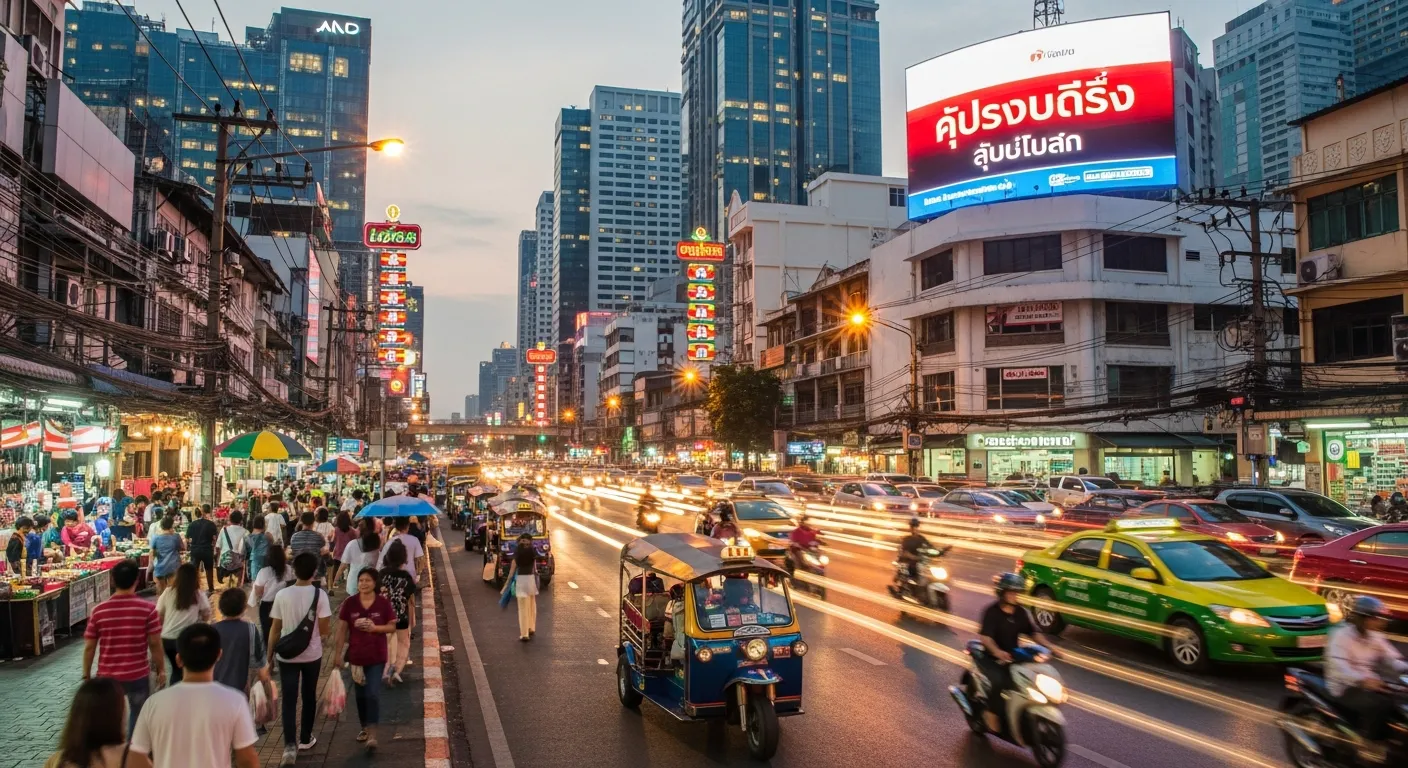
Bangkok hits you like a playlist on shuffle: golden temples, speakeasy bars, insane traffic, and then this perfect $1 bowl of boat noodles on a quiet side street.
Why Bangkok Deserves At Least A Few Days
Bangkok is more than a jet‑lag pit stop. Give it 2–3 days and you can:
- Wander the Grand Palace and Wat Phra Kaew, then cross the river to Wat Arun at sunset.
- Take a boat along the Chao Phraya River and see the city from the water.
- Eat your way through street food hubs like Yaowarat (Chinatown) or Victory Monument.
- Browse design shops and galleries, then finish with a rooftop drink over the skyline.
It’s chaotic, but it’s also the cultural and culinary heart of the country.
Best Neighborhoods To Stay In Bangkok
For a short stay, think about transit first. You’ll want easy access to the BTS Skytrain or MRT.
- Sukhumvit (Asok, Thong Lo, Ekkamai): Modern, central, full of cafés, co‑working spots, and nightlife. Great if you’re working remotely and want creature comforts.
- Ari: A quieter, creative neighborhood with indie cafés and tree‑lined streets. Feels more “local” without being inconvenient.
- Old Town (Rattanakosin / riverside): Best for temple‑hopping and history, lovely boutique hotels, more limited transit.
Skip staying right on Khao San Road unless you’re specifically here for the backpacker party scene and don’t mind noise.
Food, Nightlife, And Culture Highlights
You could spend days just eating here:
- Try pad kra pao, boat noodles, or khao man gai from busy corner stalls (aim for places packed with locals).
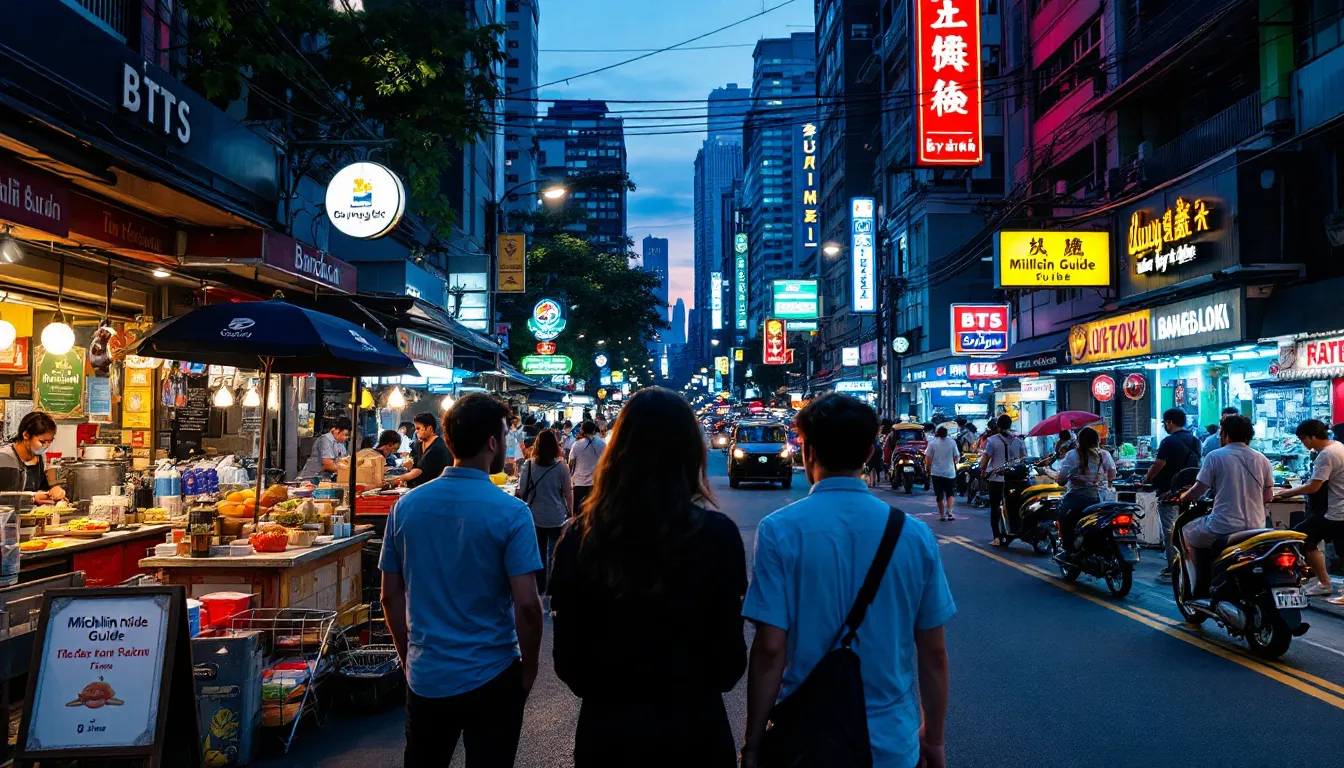
- Bangkok is famous for “Michelin Guide” street vendors, you’ll see the plaques on a few legendary carts.
- For nightlife, check out rooftop bars in Sukhumvit or Chinatown’s hidden cocktail bars.
- Culture-wise, squeeze in Jim Thompson House, contemporary art galleries, and at least one market – Chatuchak Weekend Market if your dates line up.
When To Skip Or Limit Time In Bangkok
You might want to keep Bangkok short (1–2 nights) if:
- You’re sensitive to heat, traffic, and noise.
- You‘re coming straight from burnout and want to head north or to the islands to decompress.
- You‘ve already done big cities in Southeast Asia and feel drawn more to nature this round.
In those cases, fly in, enjoy one great night of food and temples, then move on quickly to Chiang Mai or your chosen island base.
Chiang Mai And The North: Temples, Mountains, And Slow Travel
If Bangkok is a shot of espresso, Chiang Mai is a pot of herbal tea. Mornings start with monks collecting alms, afternoons slide into café hopping, and evenings glow with lantern‑lit night markets.
Why Digital Nomads And Creatives Love Chiang Mai
Chiang Mai is one of the world’s classic digital nomad hubs for a reason:
- Dozens of cafés with strong Wi‑Fi, cheap coffee, and relaxed stay‑all‑day vibes.
- A slower pace that makes it easy to actually focus on projects.
- Easy access to nature, you can be in the mountains or at a waterfall in under an hour.
You’ll also find co‑working spaces, yoga studios, and a community of long‑term travelers and remote workers.
Top Areas To Stay And Work From
- Nimmanhaemin (Nimman): The creative, café‑dense neighborhood west of the Old City. If you picture yourself working on your laptop with a cold brew surrounded by plants and soft jazz, this is your spot.
- Old City: More temples, guesthouses, and backpackers. Great if you want to walk everywhere and soak in the history.
Both areas have plenty of monthly rentals, from simple studios to stylish apartments.
Side Trips: Pai, Chiang Rai, And Mountain Villages
The north is full of side quests:
- Pai: A 3‑hour minivan ride through the mountains. Think hot springs, canyons at sunset, live music bars, and an easygoing backpacker vibe.
- Chiang Rai: Home to the otherworldly White Temple (Wat Rong Khun) and the Blue Temple. Often done as a day trip, but staying over a night lets you slow down.
- Doi Inthanon National Park: Thailand’s highest peak, with waterfalls, short hikes, and cool air.
- Hill and mountain villages: Look for community-based tourism programs where your stay directly supports local communities, rather than rushed tourist “village tours.”
Who The North Is (And Isn’t) Right For
The north is perfect if you:
- Love temples, markets, and café culture.
- Want to work remotely and keep costs low.
- Prefer cooler temperatures (especially Nov–Feb) and easy access to nature.
It’s less ideal if your vision of Thailand is all about intense nightlife or if you absolutely need a beach every day, in that case, limit the north to 3–4 days and spend the rest of your time south.
Phuket, Krabi, And Koh Lanta: Easy-Access Beaches And Island Hopping
Fly an hour south from Bangkok and suddenly the skyline turns into limestone cliffs and turquoise water. The Andaman Coast is one of the easiest Thailand vacation destinations for first-timers.
Phuket: Busy, Convenient, And Varied
Phuket is Thailand’s biggest island and a major hub, with tons of flight connections.
- Pros: Lots of accommodation choices, good hospitals (reassuring if you’re far from home), coworking spaces in some areas, and endless tours.
- Best areas:
- Phuket Old Town for colorful Sino-Portuguese buildings, cafés, and a local feel.
- Kata or Karon for a mix of beaches and amenities.
- Avoid (unless you want it): Patong, which is loud, party-heavy, and full of touts.
Krabi And Railay: Cliffs, Climbing, And Sunsets
Krabi province feels more dramatic, with towering karst cliffs dropping straight into the sea.
- Base yourself in Ao Nang or Klong Muang for beaches and day trips.
- Take a longtail to Railay Beach, technically a peninsula, but only reachable by boat. It’s a hub for rock climbing, kayaking, and some of the best sunsets in Thailand.
- From here, you can hop over to Phi Phi Islands for day trips (beautiful, but busy) or choose quieter nearby islands.
Koh Lanta: Laid-Back And Family-Friendly
If Phuket feels too intense, Koh Lanta might be your Goldilocks island.
- Long, west‑facing beaches with space to breathe.
- A mix of simple bungalows, mid‑range hotels, and boutique stays.
- Lanta Old Town has wooden stilt houses and a sleepy, “old Thailand” vibe.
It’s also one of the better Andaman spots if you’re working remotely, the vibe is relaxed, but you can still find Wi‑Fi-friendly cafés and co‑working spaces.
Island Hopping And Short Itineraries From The Andaman Coast
With a week, you could:
- Spend 3 nights in Phuket (Old Town or Kata) and 4 nights on Koh Lanta.
- Or split Krabi/Ao Nang and Railay with a day trip to Phi Phi or the Four Islands.
From all these bases, tours will offer snorkeling, kayaking through mangroves, and trips to photo-famous spots like Phang Nga Bay, the one with the dramatic sea stacks rising out of emerald water.
Koh Samui, Koh Phangan, And Koh Tao: Gulf Islands For Every Travel Style
On the opposite side of the peninsula, the Gulf of Thailand offers another trio of iconic islands, each with its own personality.
Koh Samui: Resorts, Cafés, And Easy Living
Koh Samui is the most developed of the three, with an actual airport and plenty of comforts.
- Great if you want resorts, spas, beach clubs, and a wide choice of restaurants.
- Areas like Fisherman’s Village (Bophut) feel more charming and low‑key than the main strips.
- You can also take boat trips to Ang Thong Marine Park for kayaking and snorkeling.
Koh Phangan: Beyond The Full Moon Party
Yes, the Full Moon Party is here, and if you’re curious, you can absolutely experience that side. But Phangan is also a wellness and slow-travel island:
- The north and west coasts (Srithanu, Haad Yao) are known for yoga, meditation centers, and conscious cafés.
- There are long-stay digital nomads, workshops, and a softer, barefoot energy.
Pick your area wisely and you can avoid the party scene almost entirely.
Koh Tao: Diving, Freediving, And Chill Beach Days
Tiny Koh Tao is a diver’s playground.
- One of Southeast Asia’s most popular (and affordable) places to get scuba certified.
- Crystal-clear coves, snorkel-friendly beaches, and hilly viewpoints.
- More compact and laid-back than Samui, with enough cafés and bars to keep evenings interesting.
Choosing The Right Gulf Island For Your Trip
Think of them like this:
- Koh Samui: Best for first-timers who want comfort, couples who love nice stays, and anyone splitting work and beach time with reliable infrastructure.
- Koh Phangan: Ideal if you’re into yoga, wellness, or a semi-nomadic lifestyle, with the option of a party if you want it.
- Koh Tao: Perfect for divers, freedivers, and snorkel fans, or if you just want a compact, easygoing island.
You can hop between all three fairly easily by ferry, so you don’t have to choose just one if you’ve got 10–14 days.
Beyond The Classic Spots: Underrated Thai Destinations Worth Your Time
Once you’ve done the “big” Thailand vacation destinations, the real magic often shows up in the places your friends haven’t heard of yet.
Isaan: Food, Festivals, And True Off-The-Beaten-Path Travel
Isaan, in northeastern Thailand, is where you go when you want zero Instagram staging and a lot of real life.
- Cities like Ubon Ratchathani, Khon Kaen, and Udon Thani are gateways to rural villages, riverfront temples, and night markets with some of Thailand’s spiciest, most flavorful food.
- Dishes like som tam (papaya salad), grilled chicken, and sticky rice all have deep roots here.
- Time your visit with festivals, and you’ll see parades, candle processions, and rituals that rarely show up on standard tours.
It’s best if you’re comfortable with less English signage and are open to a bit of improvisation.
Trang And The Quiet Andaman Islands
South of Krabi and Phuket, Trang province and nearby islands are what many people imagine when they say, “I want a quiet Thai island.“
- Think Koh Mook, Koh Kradan, Koh Ngai – small, relaxed islands with clear water and far fewer crowds.
- Perfect if you want to read a stack of books in a hammock, snorkel off the beach, and fall asleep to the sound of waves.
Facilities are simpler than on Phuket or Samui, but that’s the charm.
National Parks, Jungle Stays, And Eco-Lodges
If you’re more into jungle than beaches, Thailand delivers:
- Khao Sok National Park (south): Stay in a floating bungalow on the lake, kayak between limestone cliffs, and fall asleep to jungle sounds.
- Erawan National Park (west of Bangkok): Famous for its multi‑tiered turquoise waterfalls and short hikes.
- Smaller eco-lodges across the country offer treehouses, riverside cabins, and community-run stays.
Look for operators that prioritize wildlife protection and avoid exploitative activities, especially anything involving riding animals or feeding wildlife.
Balancing Popular Spots With Hidden Gems
One way to build a more meaningful trip:
- Spend 60–70% of your time in more popular hubs (Bangkok, Chiang Mai, one main island) where logistics are easy.
- Use the remaining 30–40% to dip into a lesser-visited area: a Trang island, an Isaan city during a festival, or a few nights in Khao Sok.
That mix keeps your travel smooth but still gives you stories that don’t sound like everyone else’s Instagram captions.
Practical Tips For Planning Your Thailand Vacation (And Working Remotely)
You’ve picked your dream Thailand vacation destinations. Now it’s about making the trip actually work, flights, Wi‑Fi, etiquette, and all.
Connectivity, Coworking, And Cafés With Wi‑Fi
- SIM cards: Grab a local SIM at the airport (AIS, DTAC, or True) with a data package. It’s cheap and usually takes under 10 minutes.
- Wi‑Fi: In Bangkok and Chiang Mai, fast Wi‑Fi is the norm in cafés and hotels. Islands vary more, but Samui, Phangan (west coast), Phuket, and Koh Lanta generally have reliable connections.
- Coworking: Chiang Mai (especially Nimman), Bangkok (Sukhumvit), and larger islands like Samui and Phuket all have co‑working spaces if you need focused days.
Getting Around: Trains, Ferries, And Low-Cost Flights
- Domestic flights: Airlines like Thai Smile, AirAsia, Nok Air, and VietJet connect major cities and islands for $30–120 one way if you book ahead.
- Night trains: Classic routes like Bangkok–Chiang Mai offer sleeper trains that double as both transport and an experience.
- Buses and minivans: Budget-friendly options between regions and smaller towns.
- Ferries: Link the mainland with islands: in high season, book at least a day or two in advance.
Respectful Travel: Culture, Etiquette, And Sustainability
A few basics go a long way:
- Dress modestly (shoulders and knees covered) when visiting temples.
- Remove your shoes before entering homes and certain indoor spaces.
- Use your right hand to give and receive items: avoid touching people’s heads.
- Say “khop khun ka/krap“ (thank you), people appreciate the effort.
On the sustainability side:
- Avoid elephant riding and any wildlife attractions that feel like petting zoos.
- Refill a reusable water bottle where possible, and say no to extra plastic bags and straws.
- Support local, family-run guesthouses and eateries when you can.
Sample One- And Two-Week Thailand Itineraries
To tie all these options together, here are a couple of simple blueprints.
1-week (first-timer, mix of city, culture, and beach)
- Days 1–2: Bangkok – Temples, street food, river cruise, one rooftop bar.
- Days 3–5: Chiang Mai – Temples, cafes, night markets, one day trip (Doi Inthanon or an ethical elephant sanctuary).
- Days 6–7: Beach – Short flight to Phuket, Krabi, Koh Samui, or Koh Lanta for two days of sun before flying home.
2-week (slow-ish travel + remote work)
- Days 1–3: Bangkok – Get over jet lag, explore the city, maybe work one light day from a café.
- Days 4–8: Chiang Mai – Base in Nimman, mix work and exploration, add a side trip to Pai or Chiang Rai.
- Days 9–14: Islands – Choose:
- Andaman route: Phuket (Old Town) + Koh Lanta, or Krabi + Railay.
- Gulf route: Koh Samui + Koh Phangan or Koh Tao.
From there, it’s just a matter of playing Tetris with flight times and your energy levels.