
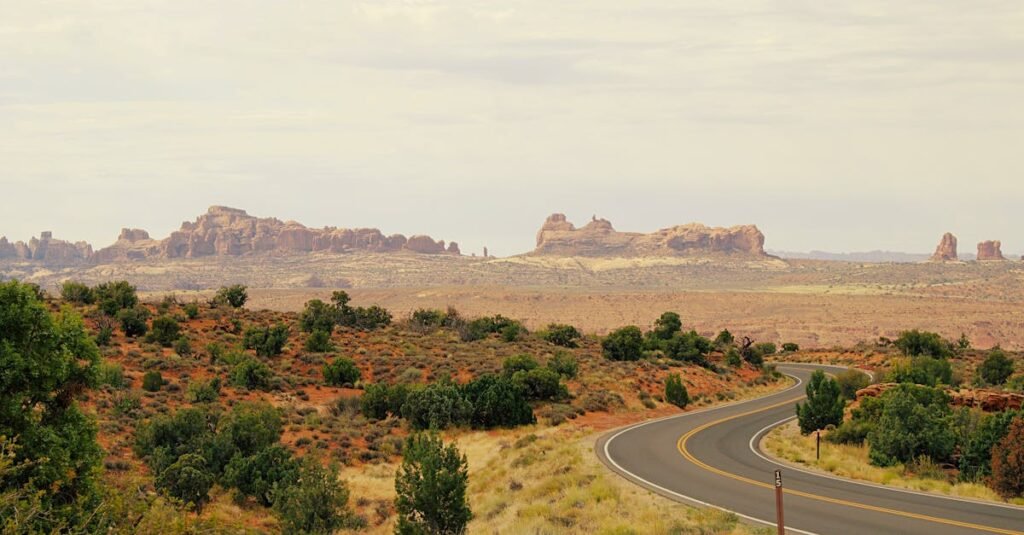
The first time we drove into southern Utah, it felt a bit like landing on another planet. Red cliffs glowing at sunset, slot canyons slicing through stone, arches hanging improbably in the sky, it’s a lot, in the best way.
And that’s exactly why the best of Utah national parks trip can also be exhausting if we try to cram everything into a few frantic days.
This guide is our answer to that. We’ll walk through each of Utah’s Mighty 5, what they’re really best for, and how to plan an itinerary that balances big bucket-list hikes with slow mornings, scenic drives, and time to just stand there and say, “What is this place?“
If you’ve been dreaming about Zion, Bryce, Capitol Reef, Arches, and Canyonlands, especially as a road trip from Vegas or Salt Lake, this is how we’d do it: immersive, realistic, and sustainable, both for you and the desert.
Why Utah’s Mighty 5 Hit Different
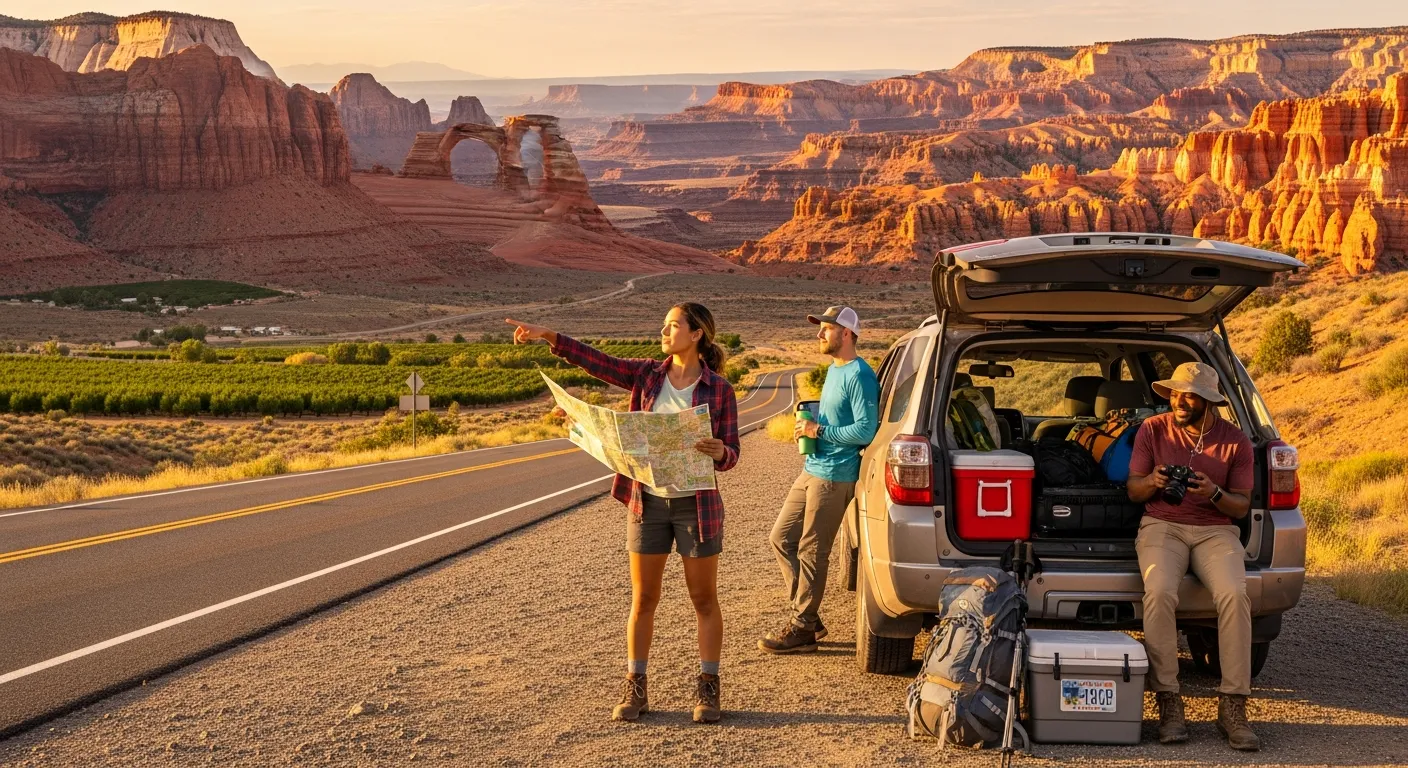
There are plenty of beautiful national parks in the US, but Utah’s Mighty 5 are uniquely road-trip friendly. Within a relatively compact region, we get:
- Soaring sandstone canyons (Zion)
- Amphitheaters of orange hoodoos (Bryce Canyon)
- Quiet orchards against red cliffs (Capitol Reef)
- The world’s highest concentration of natural arches (Arches)
- Vast, Grand-Canyon-level views without Grand Canyon crowds (Canyonlands)
We can wake up among arches in Moab, drive a few hours, and be hiking through slot-like canyons or wandering under bristlecone pines. The diversity of landscapes is wild.
But here’s the catch: that same “Mighty 5 in one week“ hype can push us into a checklist mindset, hit every overlook, hike every famous trail, shoot every sunrise, until we’re more fried than inspired.
Our approach to the best of Utah national parks is simple:
- One signature hike or experience per day (everything else is a bonus)
- Build in scenic drives and chill viewpoints as intentional “recovery time”
- Accept that you won’t see everything, and that’s okay: it gives you a reason to come back
Once we plan with this in mind, the Mighty 5 go from overwhelming to deeply memorable.
Essential Logistics For Planning Your Utah National Parks Trip
Before we get into each park, let’s anchor the basics.
- Main gateways: Most of us fly into Salt Lake City (SLC) or Las Vegas (LAS).
- SLC → Arches/Canyonlands (Moab): ~4 hours
- LAS → Zion: ~3 hours
- Park hours: All five parks are open 24/7, 365 days a year, but visitor centers, shuttles, and services have seasonal hours.
- Ideal trip length: To see the best of Utah national parks without burning out, 5–7 days is a sweet spot. Less than that, we recommend focusing on 2–3 parks.
Typical 7-day loop (LAS or SLC):
- Days 1–2: Arches (base in Moab)
- Day 3: Canyonlands (Island in the Sky) as a day trip from Moab
- Day 4: Capitol Reef
- Day 5: Bryce Canyon
- Days 6–7: Zion → drive back to LAS or SLC
Car rental & driving:
- A regular sedan is totally fine in good weather: 4×4 only needed for backcountry/rough dirt roads.
- Distances look short on a map, but Utah roads invite stopping every 20 minutes for photos. Build in buffer.
When to go for sanity, not stress:
- Best overall: Late April–May, late September–October (milder temps, somewhat fewer crowds than peak summer)
- Avoid if you hate crowds & heat: Mid-June through August, especially Zion & Arches
Logistics dialed in? Now we can get into why each of Utah’s Mighty 5 deserves a different kind of energy from us.
Zion National Park: Iconic Trails And Soaring Canyons
Best For
Zion is Utah’s superstar, lush canyon floors, the Virgin River winding past towering cliffs, and two of the most famous hikes in the country. This is where we come for big, cinematic moments: narrow slot-like canyons, chain-assisted ridgelines, and glowing sandstone at golden hour.
If we only visit one Utah park and want that “wow, I’m tiny“ feeling, Zion is the move.
Unmissable Experiences
- Angel’s Landing
A steep, exposed hike across a narrow ridge with chain sections. It’s thrilling and not for anyone with a serious fear of heights.
- Distance: ~5.4 miles round trip
- Permit: Lottery required: apply in advance.
- Best done: At sunrise or as early as possible.
- The Narrows
More of an experience than a hike. We literally walk in the Virgin River between tight, vertical canyon walls.
- Choose your distance, turn around whenever.
- Rent canyoneering shoes and a sturdy stick in Springdale when flows are high.
- Zion–Mt. Carmel Highway
A stunning scenic drive with tunnels, hairpin turns, and views that feel like concept art. There are plenty of pullouts where we can get a “big views, low effort“ afternoon.
Practical Tips For Beating The Crowds
- Use the park shuttle. In peak season, private cars aren’t allowed up Zion Canyon Scenic Drive. Shuttles are efficient: we just need to start early.
- Reverse the Instagram script. Hit the popular hikes (Angel’s Landing, The Narrows) at dawn, then take a mid-day break in town or on less-famous trails.
- Stay nearby if you can. Springdale is pricey but incredibly convenient. If we’re on a tighter budget, look at Hurricane or La Verkin.
Most importantly: build in at least one non-epic day here. A half-day walk along the Pa’rus Trail and some time on a rock by the river can be as restorative as any summit.
Bryce Canyon National Park: Otherworldly Hoodoos And Sunrise Magic
Best For
Bryce feels like someone took a regular canyon, flipped the colors to max saturation, and hit “surreal mode.“ It’s compact and easy to navigate, which makes it great when we want wow-factor without huge mileage.
Unmissable Experiences
- Sunrise at Sunset Point
Yes, the names are confusing. But sunrise at Sunset Point is one of the most magical moments in the Mighty 5. The hoodoos shift from deep purple to neon orange as the sun climbs.
- Navajo Loop & Queen’s Garden Trail
A classic 3-mile loop that takes us from rim views down into the maze of hoodoos.
- See formations like Thor’s Hammer and Queen Victoria.
- Rated easy-to-moderate: decent intro to hiking at higher elevation.
- Fairyland Loop
A longer, more challenging loop with fewer people and sweeping views. Ideal if we want the Bryce mood without the crowds.
Practical Tips For First-Timers
- Arrive before sunrise. Watch from Sunset Point, then head straight onto the Navajo/Queen’s loop before the tour buses roll in.
- Expect cooler temps. Bryce sits higher than Zion and Arches. Even in summer, mornings can feel crisp.
- One night is often enough. We can see the best of Bryce in a long afternoon + sunrise hike the next morning. That keeps our Mighty 5 itinerary from feeling jammed.
Capitol Reef National Park: Quiet Orchards And Red-Rock Ridges
Best For
Capitol Reef is where we go to exhale. It’s often the most underrated of the best Utah national parks, which is exactly why it belongs in a burnout-free itinerary.
Think wide-open vistas, historic orchards you can actually pick fruit from in season, and scenic drives where we might go a full hour without seeing a crowd.
Unmissable Experiences
- Fruita Historic District & Orchards
Wander under cottonwoods, visit the tiny schoolhouse, and, in season, pick apples, peaches, or cherries from the park’s old orchards (small fee for what we take).
- Capitol Reef Scenic Drive
Paved and easy, with multiple pullouts and short side hikes. It’s a perfect lower-energy day.
- Short Hikes
Options like Hickman Bridge give us that “natural arch + canyon“ combo without Moab-level crowds.
Scenic Drives And Slow-Travel Vibes
Capitol Reef is a park we can absolutely experience from the driver’s seat and a few mellow strolls. That makes it a great “reset day” in the middle of a Mighty 5 route.
- Base in Torrey, a tiny town with surprisingly good food for its size.
- Drive the main scenic road, stop whenever something catches our eye, and let this be the day we don’t race the sun.
Arches National Park: Iconic Rock Formations Near A Lively Base
Best For
If we’ve ever seen a Utah license plate, we’ve met Delicate Arch already. Arches is the introductory highlight reel of the best Utah national parks: photogenic formations, relatively short hikes, and a fun base in nearby Moab with coffee shops, breweries, and outdoor energy.
Unmissable Experiences
- Delicate Arch Trail
The most famous arch in the state, maybe the world.
- Distance: ~3.2 miles round trip, moderate with some slickrock.
- Best photos: Sunset. Best sanity: Sunrise, before the crowds and heat.
- Devils Garden Trail
A choose-your-own-adventure hike that can range from a shorter out-and-back to Landscape Arch to a longer, more rugged loop.
- See multiple arches in one hike.
- Some sections feel like a natural playground of fins and slabs.
- Sand Dune Arch to Broken Arch Loop
Easy, family-friendly loop (~2.8 miles) with soft sand, narrow corridors, and big views.
When To Visit For Fewer Crowds
Arches is busy. The key is timing.
- Hit Delicate Arch at sunrise. It’s early, but the approach in cool air and watching first light hit the arch is unforgettable.
- Midday = scenic drive time. Use the heat of the day for viewpoint-hopping in the car.
- Evenings in Moab. Grab dinner, wander town, or just sit on a porch and let your legs recover.
Two days here is enough to see a lot without chasing every single arch on the map.
Canyonlands National Park: Vast Views And Backcountry Energy
Best For
Canyonlands is for those of us who like feeling very, very small. Think endless canyons, layered mesas, and river-carved gashes that stretch to the horizon.
It’s less about one single “Instagram spot” (though Mesa Arch is up there) and more about the scale of the landscape.
Unmissable Experiences
- Island in the Sky District
The most accessible part of the park from Moab.
- Mesa Arch at sunrise is iconic, an easy walk to a perfectly framed canyon view.
- Short hikes and overlooks like Grand View Point give huge vistas for minimal effort.
- The Needles District
Quieter, with moderate hikes weaving between colorful sandstone spires. Ideal if we’re staying longer in the area and want more solitude.
Choosing Between Island In The Sky And The Needles
We usually don’t try to do both in one short visit, they’re not connected by road and have separate entrances.
- Limited time (1 day from Moab): Go Island in the Sky. Easy access, big views, short hikes.
- Extra time / love longer day hikes: Consider The Needles for a more immersive desert experience.
Either way, Canyonlands pairs naturally with Arches as a 2–3 day Moab chapter in a Mighty 5 road trip.
How To Choose Which Utah National Park Is Best For You
If You Have A Long Weekend
We don’t need all five parks to have a powerful Utah experience. For 3–4 days, we’d choose one hub and go deep.
- Zion focus (from Las Vegas):
Great if we want iconic hikes (The Narrows, Angel’s Landing) and a more lush, canyon-river vibe.
- Moab focus (Arches + Canyonlands) from SLC or Grand Junction:
Ideal for variety of arches + canyon overlooks, plus a fun town base and good Wi-Fi.
If You Have 5–7 Days
This is where the classic “best of Utah national parks“ road trip really works without burnout.
- 2 days: Arches + 1 day Canyonlands
- 1 day: Capitol Reef (scenic drives, orchards, mellow hikes)
- 1 day: Bryce Canyon
- 2 days: Zion
Build in at least one half-day where the only “plan” is a scenic drive, a viewpoint, and a slow dinner.
Best Parks By Season And Weather
- Spring (March–May): Arches, Canyonlands, Capitol Reef shine. Zion is lovely but can be busy: higher Bryce may still have snow (which is beautiful, just dress warm).
- Summer (June–August): Mornings and evenings are everything. Zion and Arches get hot and crowded: Bryce and higher elevations feel more comfortable.
- Fall (Sept–Oct): Our personal favorite. Cooler temps, golden cottonwoods in Zion and Capitol Reef, and generally more pleasant hiking.
- Winter: Quiet, surreal, and potentially icy. Bryce’s hoodoos dusted in snow are next-level, but some roads and trails can be limited.
Budget, Crowds, And Remote Work Considerations
- Passes: If we’re hitting multiple parks, the America the Beautiful annual pass (~$80) quickly pays for itself.
- Lodging:
- Moab & Springdale: Higher prices but great access and amenities.
- Torrey (Capitol Reef) & towns near Bryce: Generally more budget-friendly.
- Remote work:
- Moab has solid Wi-Fi, cafes, and coworking-friendly spaces.
- Springdale is workable but more limited: check hotel/Airbnb reviews for Wi-Fi.
- Plan “work-heavy“ days on either end of the trip or in Moab, with lighter adventures around them.
If we align parks with our energy, budget, and travel style instead of trying to “collect” them all, the whole trip feels more intentional and less like a race.
Sample 5–7 Day Mighty 5 Road Trip Itinerary
Here’s a realistic, avoid-burnout version of a best of Utah national parks loop. You can run this from either Las Vegas or Salt Lake City with minor tweaks.
Day 1 – Arrive + Moab Sunset (Arches)
Drive to Moab, check in, and do an easy Arches intro: Park Avenue overlook, Balanced Rock, and a short walk to Windows Section for sunset.
Day 2 – Arches Headliner + Chill Evening
Sunrise hike to Delicate Arch, then brunch in Moab. Nap, read, or work a bit in the afternoon, then hit Devils Garden for a shorter evening stroll.
Day 3 – Canyonlands (Island in the Sky)
Sunrise at Mesa Arch, then spend the day doing short hikes and overlooks, Grand View Point, Green River Overlook. Back to Moab for dinner.
Day 4 – Drive To Capitol Reef
Take the scenic route to Capitol Reef. Afternoon: Fruita orchards, scenic drive, a short hike like Hickman Bridge. Stay in or near Torrey.
Day 5 – Bryce Canyon Sunrise + Hoodoo Hike
Early drive to Bryce Canyon. Sunrise at Sunset Point, then hike Navajo Loop & Queen’s Garden. If you still have energy, tack on viewpoints along the rim. Overnight near Bryce or continue toward Zion.
Day 6 – Zion: River Day
Arrive in Zion. Ease into the park with a mellow day: Pa’rus Trail, shuttle ride, hanging out by the Virgin River, maybe a short canyon trail.
Day 7 – Zion Headliner + Departure
Early start for either The Narrows or, if you have a permit and the nerves, Angel’s Landing. Shower, eat, and then drive back to your departure city.
Notice how every day has one “main event” and plenty of flexible space. That’s the key to making the Mighty 5 feel expansive instead of exhausting.
Quick Packing And Safety Tips For Utah’s Desert Parks
Utah’s desert is stunning, and unforgiving if we underestimate it. A few non-negotiables:
- Water: Aim for at least 3 liters per person per day on hikes: more in summer.
- Sun protection: High-SPF sunscreen, a wide-brim hat, sunglasses, and lightweight long sleeves.
- Footwear: Broken-in hiking shoes or trail runners with good traction. Slickrock can be, well, slick.
- Layers: Mornings and evenings can be chilly, especially in Bryce and higher-elevation areas.
- Navigation: Most major trails are well-marked, but less-traveled routes rely on rock cairns. A downloaded map (AllTrails, Gaia) is a smart backup.
- Weather awareness: Flash floods are a real risk in canyons and slots. If storms are in the forecast, we don’t go into narrow canyons, period.
Treat the desert with respect, and it’ll give you some of the most beautiful days of your travel life.