
You probably already have a mental image of Africa: golden savannas, elephants at sunset, maybe the red dunes of a desert or the chaos of a night market.
But what makes the continent so compelling right now isn’t just the “bucket list” shots, it’s how deeply it can change the way you travel.
Africa invites you to slow down in Swahili-speaking beach towns, to sip natural wine in a Cape Town courtyard, to dance until sunrise in Accra, to log into a Zoom call from a riad rooftop in Marrakech. It’s where wildlife conservation, music, design, and everyday city life all collide.
If you’ve wondered where to go first, or next, this guide walks you through some of the best Africa travel destinations for thoughtful, curious travelers like you, with a mix of storytelling and concrete tips you can actually use.
Why Africa Belongs On Your Travel List Now

Ask most travelers when they’ll get to Africa and they’ll say “someday.“ But the continent belongs on your short list, not your distant-maybe list.
Here’s why now is such a favorable time to go:
- Iconic experiences are more accessible than you think. Big Five safaris in South Africa’s Kruger and Sabi Sand, the Great Wildebeest Migration in Tanzania and Kenya, gorilla trekking in Rwanda and Uganda, Victoria Falls on the Zambia/Zimbabwe border, these aren’t just for luxury honeymooners anymore. There are mid-range and even budget-friendly ways to do them well.
- Value-for-money is strong. In many parts of Africa, you can stay in design-forward lodges or boutique guesthouses, eat beautifully, and join ethical tours for less than you’d pay in Western Europe.
- Travel here can be deeply meaningful. Community-run conservancies, local guides, and social enterprises let you connect your trip to real stories, conservation work, food traditions, music scenes, and contemporary African creativity.
If you’re drawn to travel that feels both transformational and grounded in reality, some of the best Africa travel destinations will probably stick with you long after your photos gather dust.
How To Choose The Right African Destination For Your Travel Style

Africa is huge, 54 countries, thousands of distinct cultures, endless landscapes. To avoid overwhelm, start with your travel style:
- Safari & wildlife first?
- Serengeti (Tanzania) & Maasai Mara (Kenya): Prime for the Great Migration (roughly June–October: exact timing shifts with rains).
- Okavango Delta (Botswana): Floodplains, mokoro (dugout canoe) rides, and high-end, low-impact camps.
- Etosha (Namibia): Otherworldly salt pans and excellent chances of seeing rhinos.
- Beach & relax?
- Zanzibar (Tanzania): Spice islands, white-sand beaches, atmospheric Stone Town.
- Bazaruto Archipelago (Mozambique): Sandbanks, clear water, and remote island feel.
- Urban & culture?
- Cape Town (South Africa): Mountains, wine, food, art.
- Marrakech (Morocco): Medina chaos, design-rich riads, café culture.
- Accra (Ghana): Music, nightlife, history, and powerful diaspora connections.
- Adventure & landscapes?
- Namibia: Sossusvlei‘s red dunes, self-drive road trips, low crowds.
- Kilimanjaro (Tanzania): One of the world’s most iconic treks.
Think about your time frame too. With 7–10 days, focus on just one country or region. With 2–3 weeks, you can pair, say, a Cape Town city stay with a safari, or Marrakech with a Sahara desert camp.
Cape Town, South Africa: Creative City Meets Coastline
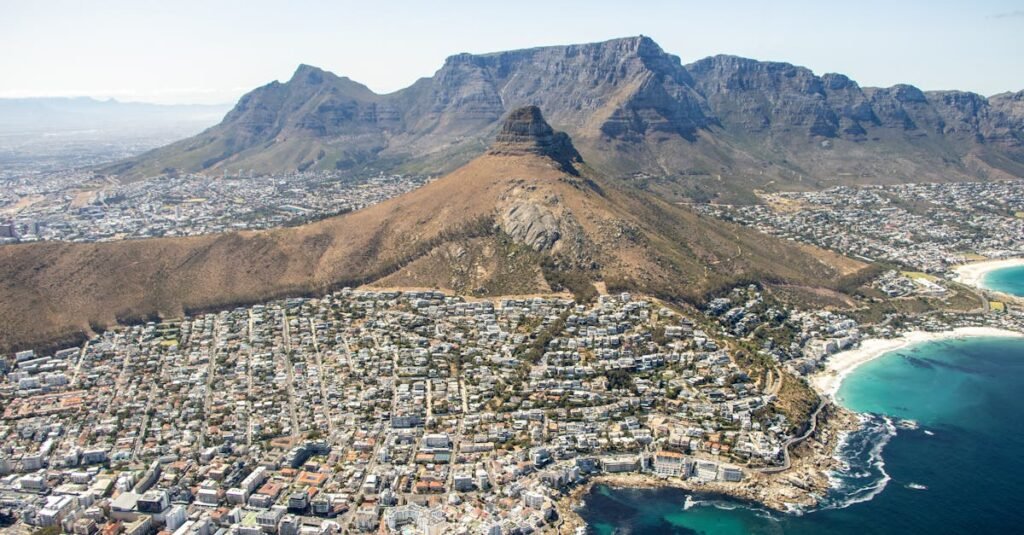
Cape Town is often the gateway for first-timers, and for good reason. It’s one of those rare cities where you can hike a mountain in the morning, work from a café in the afternoon, and be sipping world-class wine by sunset.
Picture this: you’re staying in a small guesthouse in Tamboerskloof, waking up to Table Mountain turning pink in the early light. You wander down for a flat white, answer a few emails, then hop in an Uber to the V&A Waterfront for a ferry to Robben Island or out to Sea Point for a coastal walk.
What makes Cape Town one of the best Africa travel destinations for creative, purpose-driven travelers:
- Table Mountain & Lion’s Head: Easy-to-access hikes with big payoff views. The cable car up Table Mountain is around US$25–30: hikes are free but go with a guide if you’re not experienced.
- Wine country: Stellenbosch, Franschhoek, and Constantia are all within 1–1.5 hours. Wine tastings can start around US$5–10.
- Neighborhood life:
- Gardens & Tamboerskloof for leafy streets and cafés.
- Woodstock for murals and design studios.
- Sea Point for the promenade and sunset runs.
- Malaria-free safaris: Pair Cape Town with a few days in a private game reserve in the Eastern or Western Cape, great if you’re nervous about anti-malarials or traveling with kids.
Cape Town is also a hub for co-working spaces, pop-up markets, and contemporary African art. If you like the idea of slow travel with hikes and wine weekends built into your remote-work routine, this city fits beautifully.
Zanzibar, Tanzania: Spice Islands, Soulful Beaches, And Slow Travel
If Cape Town is about energy, Zanzibar is about exhale.
The archipelago sits off Tanzania’s coast in the Indian Ocean, where the water shifts from turquoise to ink-blue and fishing boats drift along the horizon. It’s the kind of place where days stretch: a morning swim, fresh mango, a book under a palm tree, then sunset dhow cruises or beach bonfires.
Why Zanzibar is so beloved:
- Stone Town: A maze of alleys, carved wooden doors, rooftop cafés, and call-to-prayer echoing at dusk. You can stay in restored merchant houses for US$40–120+ a night.
- Beaches:
- Nungwi & Kendwa in the north for wider tides and nightlife.
- Paje & Jambiani on the east coast for kitesurfing, laid-back cafés, and a digital-nomad crowd.
- Spice & culture: Spice farm tours, Swahili cooking classes, and visits to seaweed farms run by local women.
Daily budgets are flexible: you can find simple beach bungalows from US$30–50 or splurge on boutique eco-lodges at US$150+ per night. Either way, Zanzibar encourages you to slow down rather than tick sights off a list.
Marrakech And Beyond, Morocco: Markets, Desert, And Design-Forward Stays
Marrakech hits your senses all at once: the smell of oranges and grilled meat, motorbikes weaving through narrow lanes, the call to prayer floating above terracotta roofs.
You might spend your first day simply getting lost in the medina, ducking into cool courtyards and riads that feel worlds away from the chaos outside. Many of these riads now double as guesthouses or boutique hotels, with elegant tilework, plunge pools, and rooftop terraces where you can answer emails between mint teas.
What makes Marrakech a standout among the best Africa travel destinations:
- The medina vs. new city: Staying in the old city drops you right into the markets and mosques: the newer neighborhoods like Gueliz offer tree-lined streets, galleries, and more modern cafés.
- Day trips: Easy escapes to the Atlas Mountains for hikes and village lunches, or to waterfalls and valleys that feel a world away from the city.
- Desert experiences: From glamping-style luxury camps with hot showers to simple Berber tents under a sky full of stars.
Morocco has become a favorite for digital nomads and remote workers thanks to solid Wi-Fi in cities, stylish co-working spaces, and direct flights from Europe and some US hubs. Just be ready for sensory overload, in the best way.
Nairobi, Kenya: Urban Energy, Safari Gateways, And Emerging Creative Scene
Nairobi is often treated as a stopover, somewhere you land before flying out to the Maasai Mara. But if you give it a few days, the city starts to reveal itself.
There’s the obvious draw: it’s one of the easiest gateways to some of the world’s greatest wildlife reserves. But there’s also an undercurrent of creativity, fashion designers, tech hubs, contemporary art galleries, and cafés full of young Kenyans building new things.
Here’s how Nairobi can fit into your Africa trip:
- Base yourself in Karen, Lavington, or Westlands for a mix of safety, greenery, and access to restaurants.
- Spend a day at Nairobi National Park, where you can literally see giraffes and rhinos with the city skyline behind them.
- Visit local markets for crafts and fabric, then end your day at a rooftop bar with live music.
For remote workers, Nairobi’s co-working scene is growing fast, and mobile data is relatively affordable with a local SIM. And when you’re ready for the savanna, it’s just a short flight to the Maasai Mara or down to the Serengeti in Tanzania.
Accra, Ghana: Culture, Music, And Connection On The West African Coast
Accra is where culture, history, and nightlife collide on the Atlantic coast.
On one hand, you have sobering, important visits to Cape Coast and Elmina castles, where you confront the history of the transatlantic slave trade. On the other, you have nights out where Afrobeats thrum through open-air clubs and everyone seems to know the lyrics.
What pulls many travelers, especially from the African diaspora, toward Ghana:
- Diaspora connections: December in Ghana (“Detty December“) has become legendary, with festivals, concerts, and reunions.
- Creative industries: Fashion collectives, galleries, music studios, and creative hubs are shaping a contemporary African aesthetic that’s bold and global.
- Beach and city life: You can spend the morning at a café with ocean views and the afternoon in a bustling market or museum.
Accra isn’t as “resort-y“ as other coastal destinations, but that’s part of its appeal. It feels lived-in, alive, and anchored in real stories.
Practical Tips For Planning Your First (Or Next) Trip To Africa
A few broad things to keep in mind as you plan your Africa itinerary:
- Timing matters. Dry seasons (often June–September in East and Southern Africa) are ideal for wildlife viewing and gorilla trekking. The Great Migration in Tanzania/Kenya typically peaks June–October, but it shifts with rainfall.
- Match destination to comfort level. If you like self-drive road trips and low crowds, Namibia is great value. If you want high-end, low-density lodges with seamless logistics, Botswana shines. First-timers often find South Africa user-friendly, with good roads and lots of English.
- Build in recovery time. Long-haul flights plus jet lag mean you’ll appreciate at least one “nothing day” after you land, especially if you’re heading straight into a safari schedule with early morning game drives.
- Work with local experts when it counts. Safaris, gorilla trekking, and desert trips are best arranged with reputable operators who prioritize safety and responsible travel.
From there, think in “anchors”, maybe Cape Town + Kruger, Zanzibar + mainland Tanzania, or Marrakech + Sahara, rather than trying to see the entire continent in one go.